Get Marketing Insights First
Subscribe to receive actionable strategies, growth tips, and industry insights delivered straight to your inbox.
If your machine’s relays, solenoids, or magnetic starters run on a different control voltage, we supply custom machine tool control transformers quoted to your circuit.
Matching incoming three-phase voltage for the whole machine instead of the control circuit? Look at a transformer for the machine supply. For dedicated industrial isolation requirements, check our isolation line, or browse our full Transformer Product Range.
A machine tool control transformer powers your equipment’s control circuit rather than the machine’s main motor load. Listing the control circuit separately from total machine power helps us quote the right capacity for your panel. When you pull details straight from your control schematic, we’ll review your exact control load instead of guessing from the machine’s main kVA.
| Control circuit detail | What to include for quotation |
|---|---|
| Incoming supply voltage | The input voltage feeding the control transformer from your panel. |
| Required control voltage | The output voltage your control schematic specifies for the circuit. |
| Connected control devices | Relays, solenoids, magnetic starters, or other control loads on the circuit. |
| Steady-state power rating | The specified VA rating, or the steady-state voltage and current from your load list. |
| Coil sealed and inrush VA | Each coil’s sealed VA (steady power while held closed), inrush VA (brief surge on pull-in), and how many coils energize together. |
Because coil pull-in draws more power than steady holding current, listing each coil’s sealed VA, inrush VA, and simultaneous count lets us match your real load. To walk through how those numbers add up, read How Do Inrush and Sealed VA Affect Control Transformer Sizing?.
For a single-phase control circuit, apparent power is the product of steady-state RMS (effective AC) voltage and load current: VA = V × I, or kVA = V × I ÷ 1000. Grab those steady voltage and current values from component datasheets or panel markings to estimate your base load ahead of an inquiry. Need the secondary full-load current of a specific transformer rating instead? Flip the formula to I = VA ÷ V, or I = kVA × 1000 ÷ V.
When a component sheet gives real power in watts (W) or kW rather than VA or kVA, divide by the power factor: VA = W ÷ power factor, or kVA = kW ÷ power factor. Because inductive coils pull reactive power too, the feeder and transformer must handle total apparent power rather than watts alone. As power factor drops, needed VA and current climb for the same useful output, which makes watt-only estimates too low. If you’re checking a balanced three-phase main machine supply separately, use kVA = √3 × V_line × I ÷ 1000.
Here’s a quick example calculation showing how these equations work on a control load list. On a single-phase 120 V control circuit drawing 2.5 A continuously, the apparent power comes out to 120 × 2.5 = 300 VA (0.3 kVA). If a component sheet gives 240 W with a power factor of 0.8 instead, divide to get 240 ÷ 0.8 = 300 VA. Plug the real voltages, currents, or wattages from your own control schematic into the same steps to find your continuous baseline.
Steady-state equations cover continuous running current, while relays, solenoids, and magnetic starters pull higher inrush VA when coils first energize. To factor coil pull-in into your final VA requirement, check our guide to control transformer sizing for inrush and sealed VA before we confirm your quote.
Industrial machine control circuits draw on electrical standards such as NFPA 79 (2007 edition), the U.S. electrical standard for non-portable industrial machinery. We cite NFPA 79 here as an engineering reference for your specification review, not as a certification claim for our products. Under NFPA 79, AC-supplied machine control circuits use a two-winding isolated control transformer instead of an autotransformer. An autotransformer shares one winding with no electrical isolation between input and output.
NFPA 79 allows an exemption from a dedicated control transformer under narrow supply limits. Both supply voltage (120 V AC or less) and prospective short-circuit current (1000 A rms or less) must stay within those caps. A control winding on a multi-winding power transformer can also serve the circuit when it meets those same 120 V AC and 1000 A rms limits. The standard draws control power from the load side of the machine’s main disconnect, except for memory-retention logic that must stay energized. Single-phase AC control voltage is capped at 120 V AC, while DC control circuits are capped at 250 V DC. Electromagnetic devices drawing over 20 A inrush at 120 V can use higher voltage through two-pole switching contacts.
Overcurrent protection rules in NFPA 79 depend on what the circuit controls and how the secondary winding is wired. Motor control circuits follow NFPA 70 (NEC) Article 430 Part VI, while non-motor control circuits follow NEC Article 450 Part I. Primary-side protection alone covers secondary conductors only on a single-phase, 2-wire single-voltage secondary. Even then, the primary protective setting must stay within the secondary wire ampacity adjusted by the voltage ratio between secondary and primary windings. Circuits with more than two secondary conductors require dedicated secondary protection.
NFPA 79 permits grounded or ungrounded control circuits, with a clear safeguard for each choice. Grounded systems bond the coil-common side directly to ground at the secondary winding. Ungrounded systems use an insulation monitoring device to alarm or disconnect when a ground fault occurs. All operating coils and pilot lights connect on the common side, while control contacts sit on the opposite side of the circuit. That layout prevents a ground fault from bypassing pushbuttons and starting the machine unexpectedly. Internal overload-relay contacts that stay inside the cabinet and NEC Article 725 Class 2 circuits carry specific exemptions. If your project needs full-equipment isolation rather than a panel control circuit, review our industrial isolation requirements page.
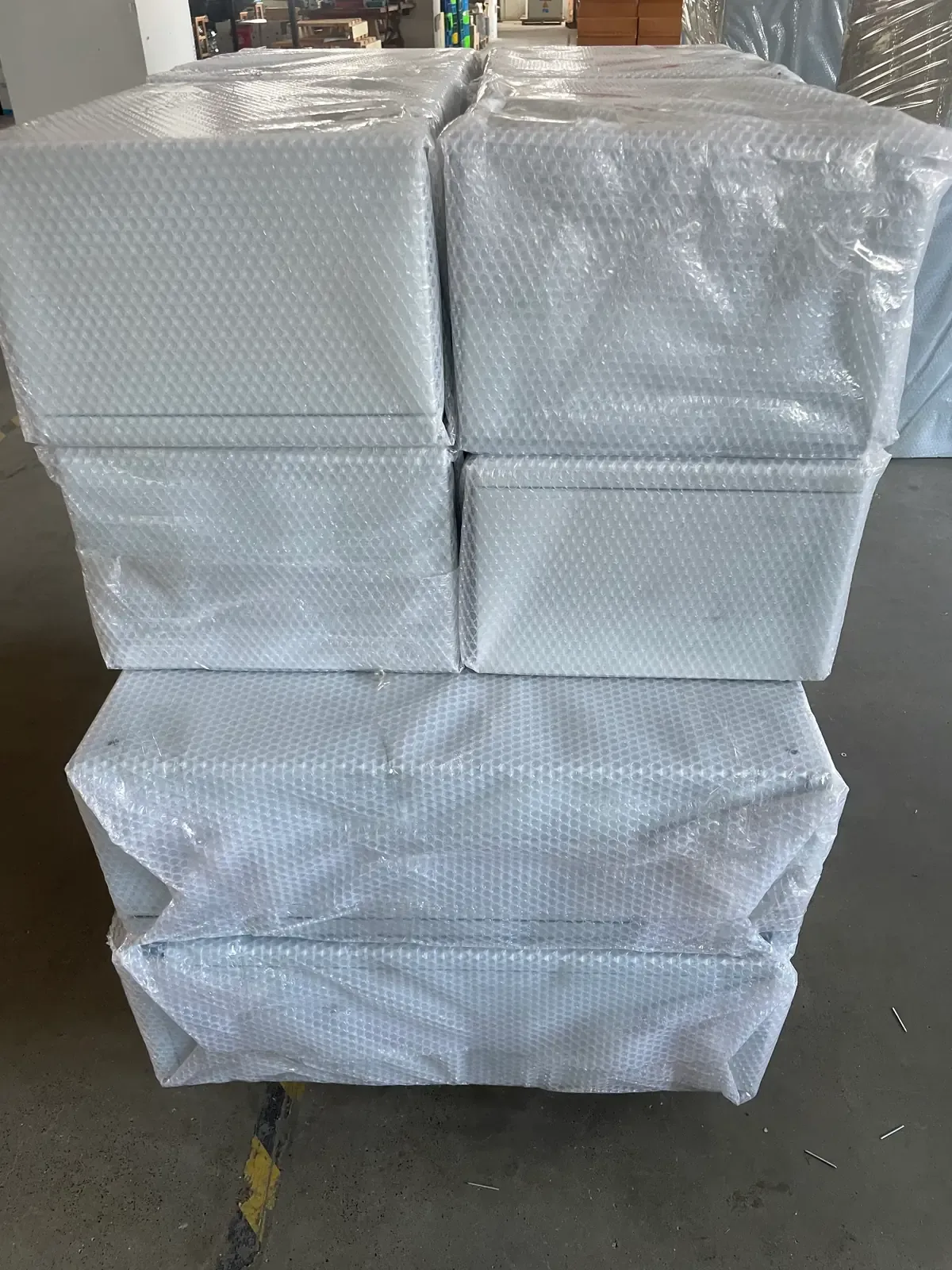
We pack machine tool control transformers in wood cases or cartons. You can review how we prepare units for handover and discuss transformer packing before dispatch ahead of shipment.
Every unit carries a one-year warranty that begins the day you receive the goods. If wiring or startup questions come up in your workshop, our team helps your technicians step through checks by remote video calls and online guidance.
Five inputs from your electrical drawings, control load list, or existing transformer nameplate help us quote your machine tool control transformer accurately:
Five practical answers cover circuit role, NFPA 79 isolation reference, order minimums, warranty timing, and shipment packing for machine tool control transformers.
A machine tool control transformer supplies low-power control devices inside the cabinet, including relays, solenoids, and magnetic starters. A main machine supply transformer handles the whole machine’s three-phase power voltage match instead. If you need incoming voltage conversion for the full machine, check our three-phase dry-type transformers for the machine supply.
Under NFPA 79 (a U.S. engineering reference, not a product certification), AC machine control circuits use a two-winding isolated control transformer instead of a shared-winding autotransformer. Separate windings support secondary coil-common grounding or insulation monitoring, while placing operating coils on the common side and control contacts on the opposite side prevents ground-fault misoperation.
You can order starting from 1 unit, which works well for a single replacement or prototype control panel. We don’t charge a separate sample-making fee, and every control transformer order is quoted to your circuit specification.
Coverage lasts for one year from the date you receive the goods rather than from shipment. For cabinet wiring or operating questions after arrival, we assist your technicians through online guidance and remote video calls.
Wood cases or cartons are used to pack machine tool control transformers. If your warehouse or freight forwarder wants to align on handover prep ahead of dispatch, check our packaging and dispatch preparation page.