Get Marketing Insights First
Subscribe to receive actionable strategies, growth tips, and industry insights delivered straight to your inbox.
If you only know your equipment kW—or want to convert kVA to kW—use one formula: kW = kVA × power factor. To turn electrical-input kW into transformer kVA, divide by the power factor for that same load and operating point. Below, you’ll find worked examples, nameplate tips, and motor checks to prepare a clean load list.
A transformer kVA-to-kW conversion multiplies apparent power (kVA) by your load’s power factor. To convert electrical-input kW back to kVA, divide by that same power factor. Apparent power (kVA) is the total voltage-current capacity your transformer carries. Real power (kW) is the working electrical power your machine actually uses.
Picture an imported machine arriving at your workshop or mine site with only a kW plate, while your site transformer lists kVA. Grab the load’s operating power factor from the machine’s nameplate or datasheet, and you’ll match those two figures in seconds.
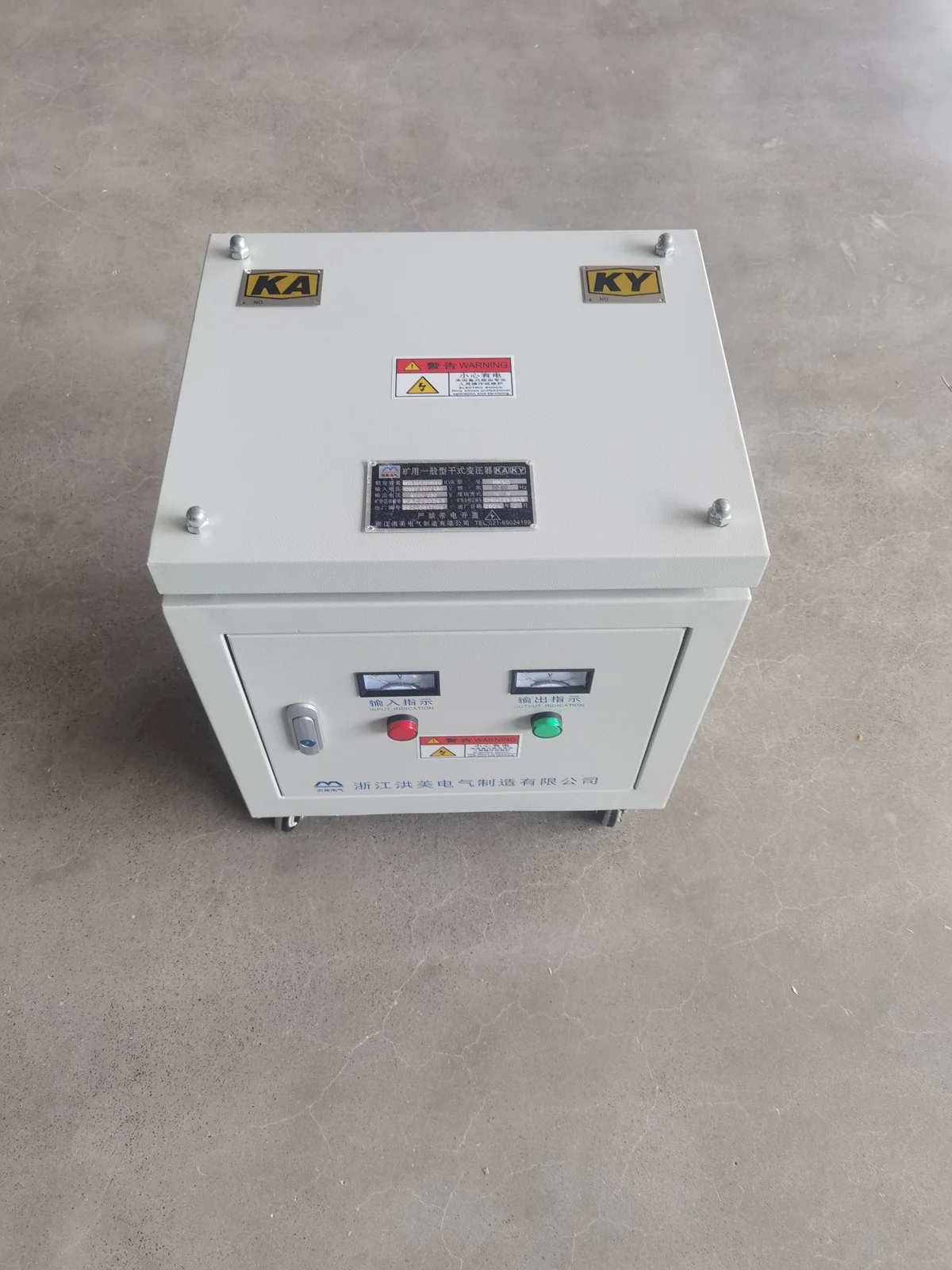
Our certificate for exact model KKDG-50/0.693(0.4) lists a rated capacity of 50 kVA. Using that grounded rating, the table below shows how usable kW changes as the sample power factor shifts under steady sinusoidal AC operation.
| Direction | Starting power | Sample PF | Result |
|---|---|---|---|
| kVA to kW | 50 kVA | 1.0 | 50 kW |
| kVA to kW | 50 kVA | 0.9 | 45 kW |
| kVA to kW | 50 kVA | 0.8 | 40 kW |
| Electrical-input kW to kVA | 40 kW (from row above) | 0.8 | 50 kVA |
That certificate rating belongs specifically to model KKDG-50/0.693(0.4), rather than setting a default size for every order. The power factors in the table are sample values to show how the math moves. Swap in your own machine’s real load rating and operating power factor before choosing a transformer.
In steady sinusoidal AC circuits, power factor equals the cosine of the phase angle between voltage and current. Reading that power factor straight from your equipment paperwork keeps your steady AC conversion accurate.
Take the third row as a quick walkthrough: multiplying 50 kVA by a sample power factor of 0.8 gives 40 kW. Reversing the math divides 40 kW of electrical input by that same 0.8 sample power factor and returns 50 kVA.
Confirm that the kW figure you plug into the reverse formula is electrical input power. In steady balanced operation, efficiency links a motor’s mechanical output to electrical input, while power factor links electrical input to apparent power. Checking that difference early keeps your kVA figure aligned with real electrical demand.
Here’s a practical habit for any project equipment list. Pull PF or cos phi straight from each machine’s nameplate or datasheet before you divide. Pairing the true operating power factor with each load saves you from revising transformer capacity partway through procurement.
Once you’ve converted your load to kVA, you can convert kVA to single-phase or three-phase current when you need rated amps. Write the unit and operating power factor next to your result before moving to the nameplate checks below.
The same transformer kVA rating delivers different kW values because kVA measures apparent power while kW measures real electrical power. Your load’s power factor sets the ratio between them at your operating condition. In plain terms, power factor is the share of apparent power that becomes real working power.
In a sinusoidal AC circuit, voltage and current waveforms can shift out of phase. That phase shift makes average real power smaller than the simple product of voltage and current, so a lower power factor yields fewer kW from the same kVA rating. That gap comes from phase angle, rather than extra heat loss inside the transformer.
Power factor and efficiency answer two separate questions, so keeping them clear protects your load list. Efficiency compares a machine’s useful output power against its input power. Power factor, by contrast, compares real electrical input against apparent power (kVA). When you read a motor datasheet, check both lines separately so an efficiency number stays out of your power-factor formula.
The phase-angle picture applies specifically to sinusoidal voltage and current, rather than giving a measured power factor for your exact load. For equipment drawing non-sinusoidal current, pull the operating power factor or electrical-input kW straight from the machine’s operating data.
Our photographed transformer nameplate above includes a rated-capacity field that identifies the transformer’s stated rating. Because power factor belongs to the load and its operating condition, you’ll look in two separate places before running the math.
Read the rated-capacity field on the transformer nameplate first, then check the driven machine’s datasheet for operating power factor. Keeping those two sources separate saves time whenever you match an existing unit to a new machine or review three-phase dry-type transformers for a site upgrade.
Before moving to motor checks, jot down the transformer’s rated-capacity field on one line and your machine’s operating power factor on the next.
A motor kW check starts by confirming whether your plate lists electrical input power or motor shaft output. Motor shaft output is the mechanical power delivered at the spinning shaft. Because efficiency separates shaft output from electrical input, confirm electrical-input kW before dividing by power factor to find kVA.
An electric motor covers internal electrical dissipation plus friction, windage, and stray mechanical losses while driving its load. Because of those losses, a shaft-output kW rating leaves out the extra electrical input power and power factor your transformer supplies.
Pull the motor’s electrical-input kW straight from the equipment datasheet whenever it’s listed. If only shaft output appears, get the motor’s operating efficiency to find electrical input first, then divide by the matching power factor.
Steady kW-to-kVA conversion assumes a balanced supply and constant or slowly changing motor speed. It handles unit conversion cleanly, while motor starting duty and final transformer sizing need dedicated checks.
Once your steady power figures are clear, continue to transformer sizing for running and motor-starting loads to verify starting and continuous duties. If your equipment also needs electrical isolation, you can review industrial isolation transformers alongside your load list.
When we prepare a custom transformer quote, we ask for your power requirement, input voltage, output voltage, and any enclosure, size, or material requirements. That’s why we ask for both the supply voltage available on site and the voltage your equipment needs alongside your power figure.
When you’re compiling several machines onto one sheet, label every power line as electrical input, motor shaft output, or apparent power right beside its operating power factor. Adding your input voltage, output voltage, and enclosure details on that same sheet saves clarification emails and keeps sizing on track.
A reliable kVA-to-kW check follows three practical steps in order. Confirm what your kW label measures, convert with your load’s real power factor, and gather your voltage and enclosure details before final sizing. Working in this order keeps guesswork out of your transformer specification.
If a machine datasheet still lacks a confirmed power factor or electrical-input rating, pause and request the full electrical datasheet from the equipment maker. Keeping your voltages, labelled power, power factor, and enclosure needs on one clean sheet prepares you smoothly for full sizing or quoting.