Get Marketing Insights First
Subscribe to receive actionable strategies, growth tips, and industry insights delivered straight to your inbox.
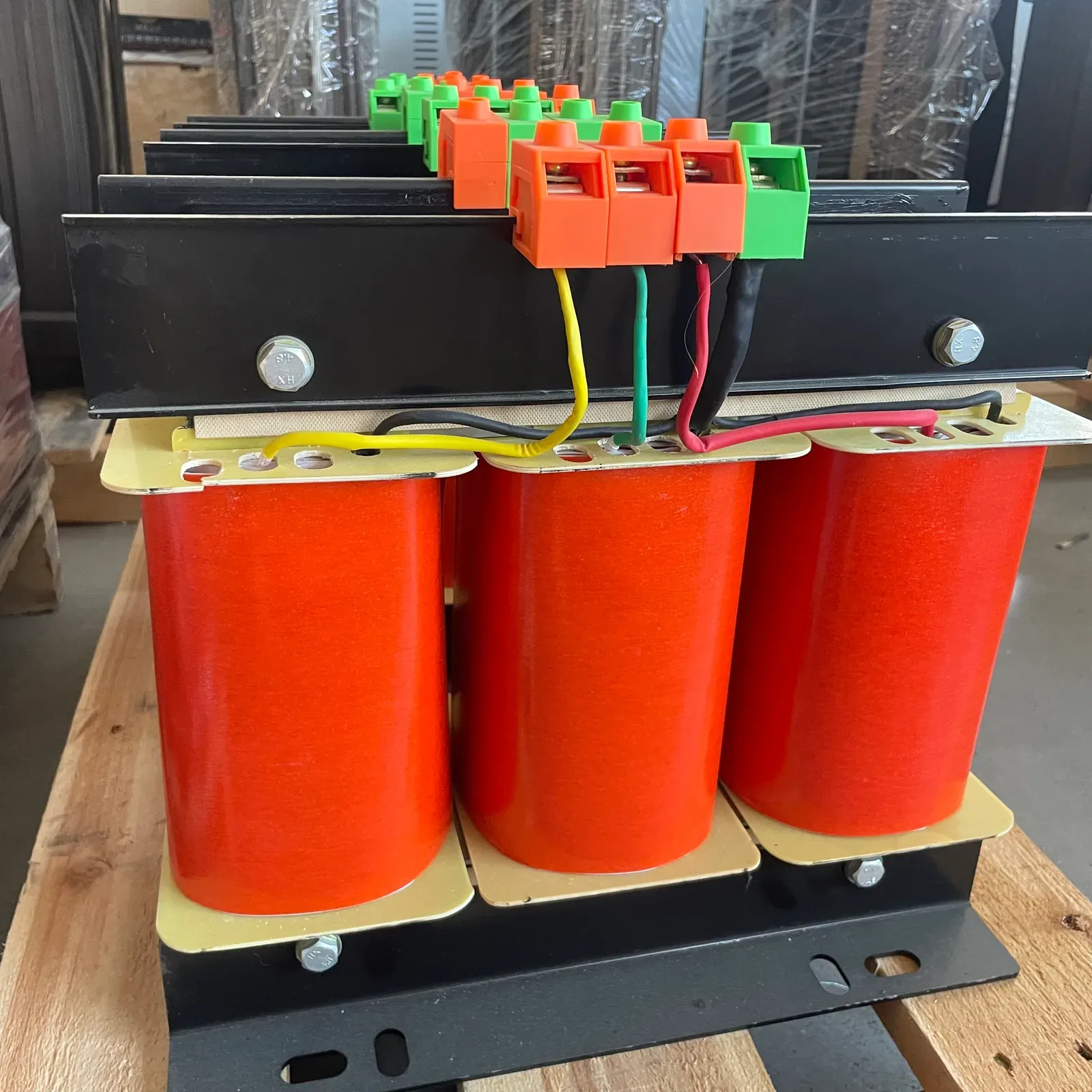
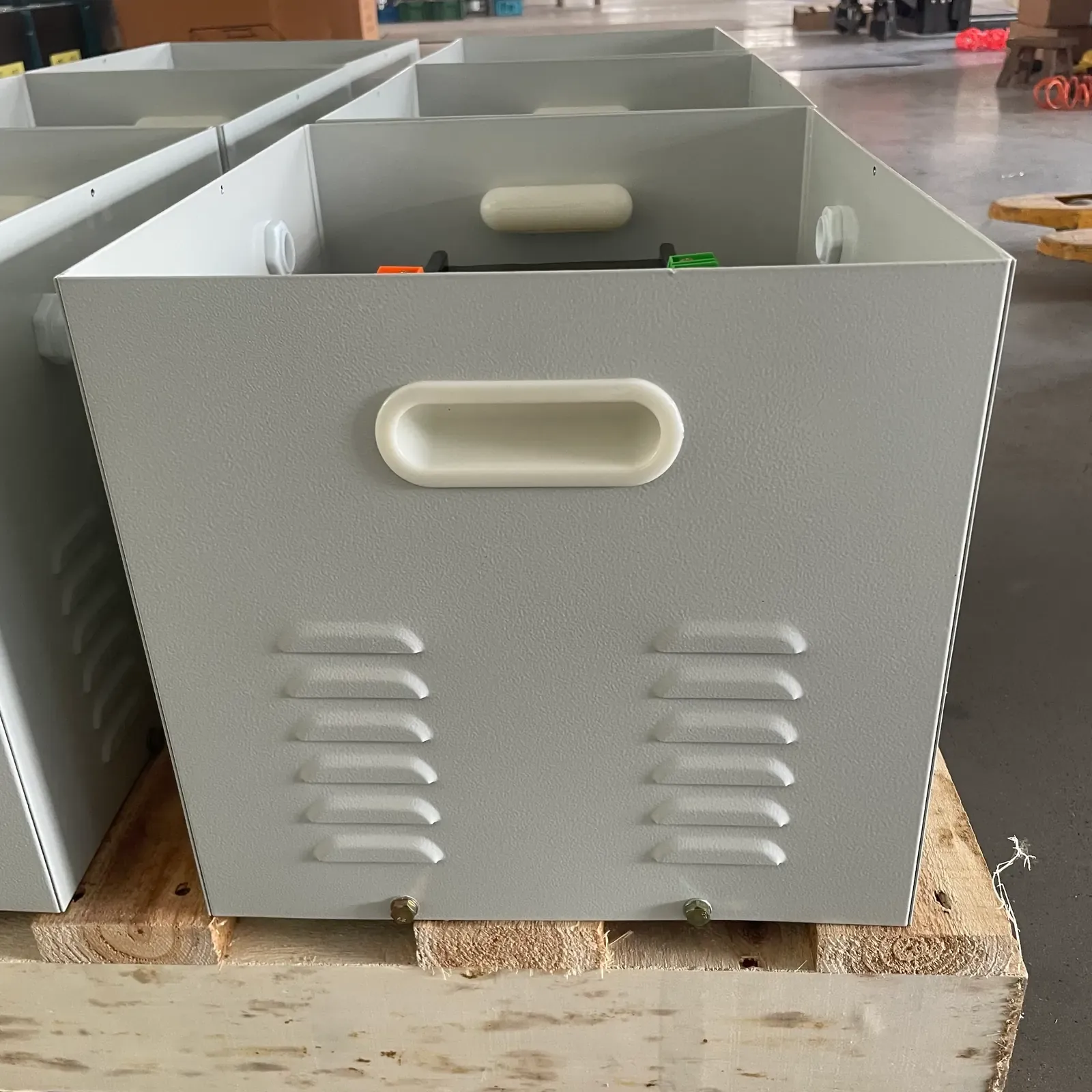
If your transformer sits standalone on a factory floor or mine pad, pick a factory-built dry-type transformer enclosure matched to your dust and water risks. An open transformer body—a bare core-and-coil assembly sold without a housing—fits only when your own control cabinet already handles guarding, grounding, and heat checks.
A standalone industrial site needs an enclosed dry-type transformer, while an open transformer body fits only inside an OEM panel builder’s cabinet. A dry-type transformer enclosure is the steel housing that shields live coils from touch, dust, and water while guiding cooling air. That choice sets who owns safety guarding and heat sign-off.
IEC 60076-11, the international standard for dry-type power transformers, lists three supply forms. A non-enclosed (open) unit ships without a protective housing and relies on open air. A ventilated enclosed unit cools coils with outside air flowing through louvers. A totally enclosed unit sits in an un-pressurized sealed box cooled only by internal air.
That physical split shifts legal and thermal duty. When a transformer and housing ship separately or get paired later, IEC 60076-11 puts clearances, thermal checks, and the enclosure rating plate on the enclosure builder or package seller. A bare core still needs a housing; the cost and compliance work move onto your own engineering team.
Check the standard’s voltage scope on smaller jobs. IEC 60076-11 formally applies to dry-type power units rated up to 72.5 kV when at least one winding exceeds 1.1 kV. It leaves out single-phase models under 5 kVA, polyphase models under 15 kVA, and flameproof or mining builds. Where no dedicated IEC standard exists for these excluded or other special transformers, IEC 60076-11 may still be applied in whole or in part.
| Comparison Dimension | Open Transformer Body (Non-Enclosed / IP00) | Ventilated Enclosed Unit (e.g., IP20 to IP23 / NEMA 1, 2, 3R/3RX) | Sealed / Non-Ventilated Enclosed Unit (e.g., IP54 / NEMA 12 / 4 / 4X) |
|---|---|---|---|
| IEC 60076-11 Structural Definition | Supplied without a protective enclosure; cooled by open air | Ventilated housing cooled by external air through louvers | Un-pressurized sealed housing cooled by internal air circulation |
| Built-In Live-Part Touch Barrier (per IEC IP Overview / OSHA >=50 V) | None; IP00 offers zero touch protection per the IEC IP ratings overview | Blocks objects over 12.5 mm and finger contact at IP2X per the IEC IP ratings overview | Factory sealed housing encloses live parts with no open louvers (meets OSHA >=50 V intent; ratings below) |
| Who Owns Thermal Rating & Derating Check | Cabinet builder or seller owns thermal checks and enclosure rating plate | Factory rates complete assembly when supplied and tested together | Factory rates complete assembly together; needs larger box or thermal margin |
| Best-Fit Installation Scene | Inside an OEM control cabinet with verified guarding, clearances, and airflow | Standalone in dry rooms, light-drip workshops, or sheltered outdoor pads | Exposed dusty industrial zones, washdown bays, or corrosive coastal sites |
Row two shows why bare cores cannot sit in open plant rooms: without a built-in touch barrier, an open body relies entirely on your host panel or room lock. As an international reference, U.S. OSHA 29 CFR 1910.303 requires approved enclosures or guarded access for energized low-voltage parts. Full cabinet, locked-room, and elevation options appear in the safety section below.
An open transformer body only pays off when your shop already builds locked control panels with tight depth limits. Even then, placing a bare core beside drives or breakers forces your team to verify cabinet heat rise. For standalone rooms, mine auxiliary bays, or sheltered yards, a factory-enclosed unit cuts sheet-metal rework and inspection delays.
We build custom KKSG, three-phase SG, and isolation SG dry-type transformers for Africa and Southeast Asia inquiries. For housed step-up or step-down factory units, review our three-phase dry-type transformers page.
Confirm in writing who signs off safety and thermal checks before requesting an open body. If your panel shop wants to cut box cost inside an existing cabinet, verify your housing owns guarding, grounding, and airflow—otherwise quote a complete enclosed unit.
Decide whether your transformer mounts inside your own control cabinet or stands alone on site before selecting a protection rating.
Match your dry-type transformer enclosure to the toughest solid, water, and corrosion hazard at the mounting spot. Using the digit meanings in the IEC IP ratings overview and NEMA 250 (up to 1000 V), clean dry rooms start at IP20 or NEMA Type 1. Drip spots use IP21 or IP22 (NEMA Type 2), and sheltered outdoor bays use IEC IP23 or NEMA Type 3R/3RX. Dust, washdown, or coastal sites require sealed or corrosion-rated housings.
An IP rating (Ingress Protection code from IEC 60529) uses two digits for solid and water barriers. Per the IEC IP ratings overview, the first digit runs 0 to 6: 0 means none, 1 blocks over 50 mm, and 2 blocks fingers and over 12.5 mm. Digit 3 blocks tools or wires over 2.5 mm, 4 blocks over 1.0 mm, 5 is dust-protected, and 6 is dust-tight. In that same overview, the water digit starts at 0 (unprotected), steps to 1 for vertical drops, and reaches 2 for 15-degree angled drips. Level 3 resists spray up to 60 degrees from vertical (as in IP23), while 4 guards against splashing from every angle (as in IP54).
A NEMA enclosure type—set by NEMA 250 for non-hazardous enclosures up to 1000 V—groups boxes by site hazard. Indoors, Type 1 blocks contact and falling dirt, while Type 2 adds drips and light splashing. Type 12 (no knockouts) adds circulating dust, lint, fibers, and oil or coolant seepage. Outdoors or in wet bays, Type 3R and 3RX shed rain, sleet, snow, and external ice, while Type 4 and 4X add windblown dust, splashing, and hose-directed water.
For dry-type transformers within its scope, IEC 60076-11 normatively references IEC 60529 for IP ratings and ISO 12944-6 for steel paint systems. IEC 60529 alone does not cover internal condensation, mechanical impact, vermin, or corrosive vapor entering through conduits. Specify space heaters, breathers, or sealed cable glands whenever those site hazards apply.
| Site Environment | Typical IEC IP Starting Point (IEC Digit Meanings) | Typical NEMA 250 Starting Point (<=1000 V) | Airflow Construction | Key Limitation to Watch |
|---|---|---|---|---|
| Clean Dry Indoor Room | IP20 (>12.5 mm / finger barrier, no water) | NEMA Type 1 (falling dirt, touch) | Permitted to be ventilated | Does not stop internal condensation or impact |
| Indoor Drip / Condensation Zone | IP21 or IP22 (>12.5 mm + vertical or 15° drip) | NEMA Type 2 (dripping & light splashing) | Permitted to be ventilated | Does not stop internal condensation or conduit vapor |
| Sheltered Outdoor Rain Zone | IP23 (>12.5 mm + 60° spray); NEMA 3R/3RX maps up to IP24 | NEMA Type 3R (or Type 3RX if corrosive) | Permitted to be ventilated | Louvered 3R/3RX do not block windblown dust |
| Indoor Circulating Dust Zone | IP54 (dust-protected + all-angle splash) | NEMA Type 12 (circulating dust, no knockouts) | Non-ventilated sealed housing | One-way rule: IP54 alone cannot replace NEMA 12 |
| Hose-Washdown Zone (Non-Corrosive) | IP66 (dust-tight + powerful water jets) | NEMA Type 4 (windblown dust & hose-directed water) | Non-ventilated sealed housing | Type 4 includes no extra corrosion protection |
| Corrosive / Coastal Washdown Zone | IP66 (dust-tight + powerful jets) + corrosion finish | NEMA Type 4X (washdown + corrosion protection) | Non-ventilated sealed housing | Specify ISO 12944 corrosion class or custom finish |
Picture a Southeast Asian mining workshop pad under a metal roof overhang. A contractor orders a louvered Type 3R box for rain, then dry-season haul-road wind blows fine dust straight through the vents. Under NEMA 250, only Types 1, 2, 3R, and 3RX may be ventilated; dust- and washdown-rated Types 12, 4, and 4X are non-ventilated (sealed) boxes. Ventilated Type 3R and 3RX shed rain and sleet, not windblown dust.
Under NEMA 250, dust- and washdown-rated Types 12, 4, and 4X are non-ventilated sealed boxes with closed air paths. Closing outside air vents makes sealed cabinets larger and warmer than ventilated boxes. Before paying that size and cooling premium, price a clean indoor electrical room with a ventilated enclosure first. Putting a ventilated unit inside an existing dry substation room avoids cabinet oversizing and thermal derating.
Treat corrosion protection separately from hose-down sealing. Under NEMA 250, only the 'X' suffix (Types 3X, 3RX, 3SX, and 4X) and Type 6P add an additional level of corrosion protection. Non-'X' boxes, including NEMA Type 4, carry no extra corrosion protection. Under IEC 60076-11 normal service rules, units must stay protected from dripping or flooding water, and buyers should specify an ISO 12944 corrosion class or custom finish.
For enclosure material selection, painted mild steel with a matched paint system fits clean dry indoor rooms and sheltered light-duty outdoor pads. Once salt spray, damp corrosive mines, or washdown can chip paint and cause rust, step up to a stainless steel housing to meet those corrosion-resistant ratings. For corrosive mine builds, specify the exact stainless-steel grade in your project inquiry.
Export tenders sometimes mix NEMA and IEC labels across equipment lists. NEMA Table A-1 allows strictly one-way conversion from NEMA Types to IEC IP codes: Type 1 meets IP20, Type 2 meets IP22, and Type 3R/3RX meet IP24. Type 12 and 13 meet IP54, Type 3 and 3X meet IP55, and Type 4 and 4X meet IP66. Notice that Type 3R/3RX covers up to IP24 (above IEC IP23). You can never convert backward from an IEC IP code to replace a contract NEMA Type.
NEMA illustrates why with NEMA Enclosure Type 3 versus IEC IP45. Type 3 requires outdoor corrosion, gasket aging, dust, external icing, and zero-water-penetration rain tests. IEC 60529 omits those four extra tests and permits limited water entry away from insulation and live parts. Exact extra tests vary by NEMA Type—indoor Types 1 and 2 omit outdoor corrosion, icing, and rain tests.
Check one final IEC water-code rule on washdown quotes. Under IEC 60529, an immersion rating (second digit 7 or 8 only) does not cover water jets (digit 5 or 6). Units exposed to both need a dual code such as IP66/IP67.
Match your worst dust, water, and salt hazard to one row in the six-environment table above, then factor in its cooling impact.
Under IEC 60076-11, a dry-type transformer built, tested, and shipped inside its factory enclosure keeps its full nameplate kVA with zero field reduction. Placing an open transformer body inside your own or an aftermarket cabinet restricts airflow. That shifts thermal verification and kVA derating (reducing usable capacity to stay within safe winding heat limits) onto the cabinet builder.
Temperature rise measures how much warmer the coils run above room air at steady full load. IEC 60076-11 links nameplate rated power to continuous steady loading at rated voltage and frequency without exceeding winding temperature-rise limits. When factory production, in-enclosure testing, and delivery happen as one package, routine dielectric checks cover the assembly with no power derating. If the box disassembles for transport, reassembled live-part clearances simply need to meet IEC 60076-3.
The duty flips once you separate the transformer from its housing. When a unit and enclosure ship separately or get paired later, IEC 60076-11 requires determining power derating via IEC 62271-202 (declaring the enclosure thermal class) or Annex C. The enclosure builder or package seller must also meet IEC 60076-3 clearances and fit a rating plate showing the enclosed rated power. No universal derating percentage exists because heat rise depends on box volume, vents, and room temperature.
When comparing two quotes at the same kVA (one factory-enclosed box and one bare core for a local panel), ask whether nameplate kVA was rated inside the quoted housing. Written confirmation that temperature-rise limits cover the enclosed assembly stops you from buying an undersized unit that trips under load.
Cooling paths explain why sealed housings grow larger. IEC 60076-11 separates ventilated enclosures (cooled by outside air) from totally enclosed units (cooled solely by internal air inside an un-pressurized sealed box). Dry-type units use AN (Air Natural, passive convection) or AF (Air Forced, fan-assisted) cooling. Sealing the vents pushes all heat through the steel walls, requiring a larger box or factory thermal margin. Pair enclosure selection with your room ventilation plan so heat leaving the cabinet walls can escape the electrical room.
Picture an OEM control panel in a hot West African factory hall, with an open transformer beside variable-frequency drives (VFDs) and breakers. Two heat risks hit together. First, IEC 60076-11 treats restricted ventilation, high ambient heat, high altitude, and heavy dust as unusual service conditions you must declare at enquiry. Second, when load-current total harmonic content exceeds 5% (common on VFD loads), extra harmonic losses must enter temperature-rise testing to keep windings safe.
Placement clearance and filter cleaning matter just as much as enclosure rating. Using OSHA 29 CFR 1910.303 as an installation reference, naturally cooled gear needs clear space from walls and adjacent cabinets so room air flows freely. On dusty mines or humid monsoon sites, fine mesh screens over louvers choke airflow unless cleaned on schedule. IEC 60076-11 directs users to follow manufacturer maintenance schedules and clear dust buildup regularly.
Write down your peak room heat, harmonic load share, and wall clearances as you finalize a ventilated or sealed box.
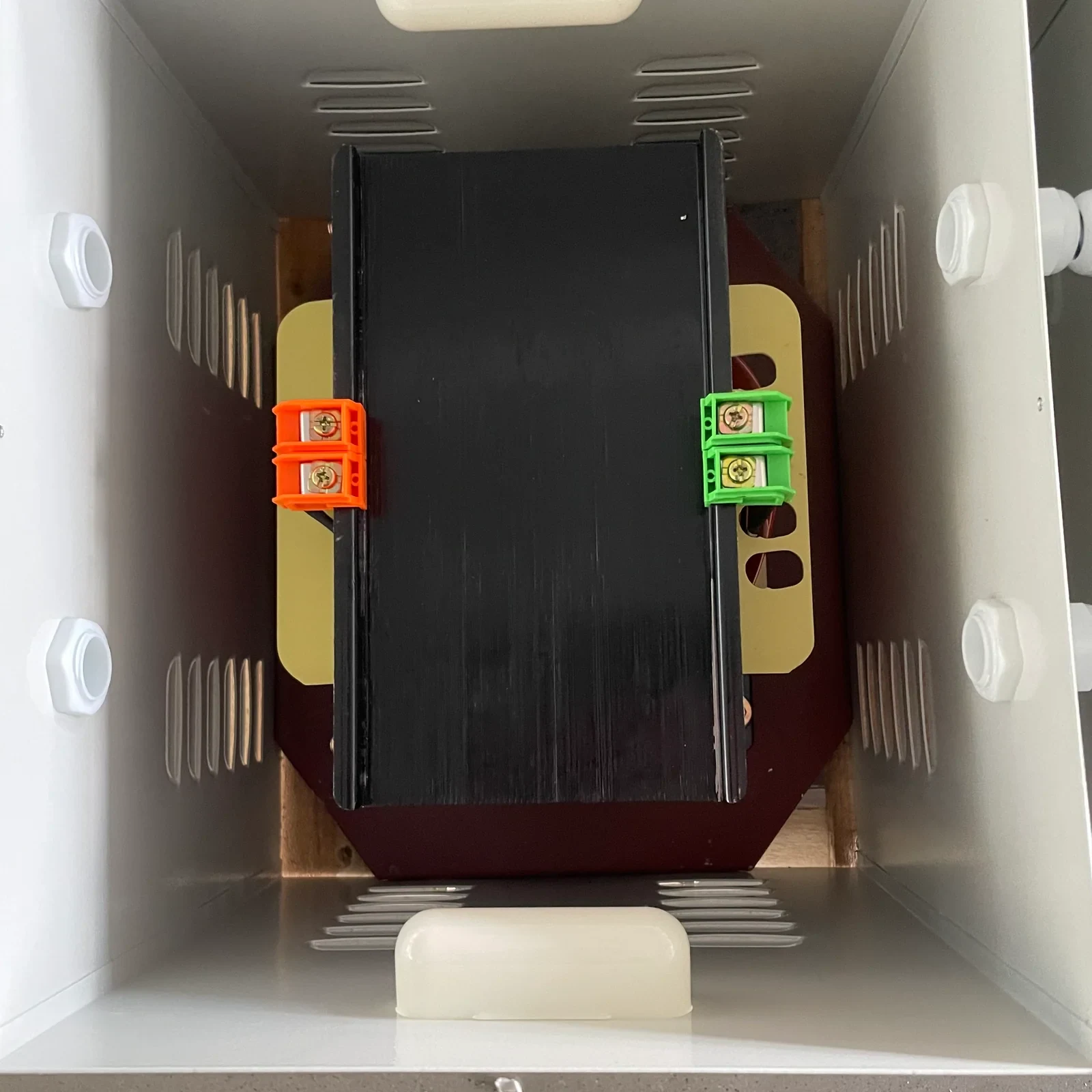
Buying an open transformer body shifts live-part guarding, front service clearances, and unused-opening sealing onto your cabinet team. Where an isolating transformer is used, your wiring team must also keep input and output circuits separated and follow the grounding boundary below. Even with a factory-enclosed unit, any metallic cabinet or transformer shell still needs proper metallic frame grounding before energizing.
When an open core mounts inside your own machinery cabinet, that panel becomes the safety barrier. Run five practical checks before handover—citing U.S. OSHA 29 CFR 1910.303 and the IEC IP ratings overview as international engineering references alongside local codes:
Walk every cable-entry gland plate and knockout before closing the cabinet door for inspection. Sealing unused conduit holes and matching cable glands to your target rating stops dust and stray fingers from bypassing the panel wall.
When wiring a general-use isolating transformer covered by IEC 61558-2-4, keep primary and secondary wiring strictly separated. That standard restricts shock protection to Class I or Class II—never Class 0 or Class III—with no electrical interconnection or bridging capacitors between input and output terminals. Output circuits may not tie to the enclosure or protective earth unless the manufacturer instructs otherwise for stationary units. Where a stationary industrial isolating transformer runs as a separately derived system, ground the secondary at one external designated point under applicable local electrical codes. For sensitive equipment needing electrical separation (galvanic isolation), see our industrial isolation transformers page.
Metallic housings on mines and heavy industrial pads also need a dependable fault-current path. As an international reference for metal and nonmetal mines (separate from coal-mine rules), the May 1981 MSHA technical paper cites 30 CFR Parts 55, 56, and 57 (§§ 12025–12026). Those rules mandate frame grounding for stationary equipment and substation enclosures, while Section 12027 covers portable gear separately. The May 1981 paper recommends running a continuous grounding conductor of adequate ampacity inside the same cable or conduit as power conductors. It also advises against using pipelines or building steel as fault paths.
Avoid Local “Peg Grounding”: MSHA’s May 1981 mine grounding paper warns against “peg grounding”—driving a local earth rod at one unit and relying on soil for fault current. Soil resistivity varies widely and leaves hazardous frame voltage; historical data cited in that May 1981 paper linked roughly 14% of electrical fatalities to improper grounding.
Two layout benchmarks from that May 1981 MSHA technical paper guide site grounding checks:
Check your cabinet guarding clearances, terminal isolation layout, and continuous grounding path on paper so nothing slows down your Request for Quotation (RFQ).
To get an accurate first-round quote without revisions, list input voltage, output voltage, rated power, and your enclosure, dimension, material, and target site protection rating. Include harsh site factors—high heat, dust, dripping water, tight ventilation, or frequent switching—so the quote prices the right housing and cooling.
Enclosure price and footprint step up along two clear design shifts. Under NEMA 250, moving from ventilated housings to non-ventilated boxes closes open vents, and NEMA Type 3RX or 4X adds extra corrosion-resistant construction. In practice, sealed gaskets, larger cabinets, and corrosion-resistant materials raise enclosure cost and footprint.
Sourcing an open core plus a local cabinet also shifts indirect cost onto your team. As the thermal section above explains, separate housing delivery puts thermal verification, potential kVA derating, clearances, and the enclosed rating plate on the cabinet builder. Weigh that engineering work, possible kVA upsizing, local assembly labor, and export crate volume against a factory-enclosed quote.
Pair our full transformer quotation checklist with the four enclosure-focused inputs below:
Don’t Skip Unusual Site Conditions: IEC 60076-11 expects buyers to declare restricted ventilation, high heat, dust, dripping water, salt spray, and abnormal storage at enquiry. List every unusual hazard up front so your quote covers the right housing and cooling.
Put your maximum cabinet footprint and cable-entry side directly inside the RFQ’s enclosure note. When replacing an older unit or fitting a tight skid, listing max width, depth, height, and top-or-bottom entry prevents on-site cutting and cable rerouting.
Here is how we handle custom dry-type transformer orders, factory checks, and warranty:
List any test reports or independent conformity certificates your site inspector or customs broker requires directly in your RFQ. IEC itself does not issue attestations of conformity, because independent certification bodies handle conformity assessment. At delivery, verify nameplate voltage and kVA rating against your order, and confirm the enclosure protection level against your order documents. If an enclosure ships separately, check that it carries its own rating plate stating the enclosed rated power.
Put those four RFQ groups into one inquiry sheet so your first quote prices the exact housing and site conditions you need.
Open transformer bodies let technicians inspect windings directly once the host cabinet is isolated and opened, yet airborne dust settles straight onto the coils. Enclosed dry-type units shield the windings from debris and shift routine upkeep to checking louvers, dust screens, and door gaskets. Under IEC 60076-11, users must follow manufacturer maintenance guidelines and clear dust buildup regularly. Keeping coils and screens clean protects cooling airflow and insulation life.
If we were choosing a dry-type transformer enclosure for your plant, non-coal mine site, or OEM panel build, we’d make the call in three steps:
Before requesting quotes, write four site facts on one page: your dust, water, and corrosion exposure plus available floor or cabinet space. Add your top or bottom cable entry and any unusual room heat, altitude, or harmonic loads.
Prepared by Oliver. Based on 11 cited sources listed in References. Content date: 2026-11-23.