Get Marketing Insights First
Subscribe to receive actionable strategies, growth tips, and industry insights delivered straight to your inbox.
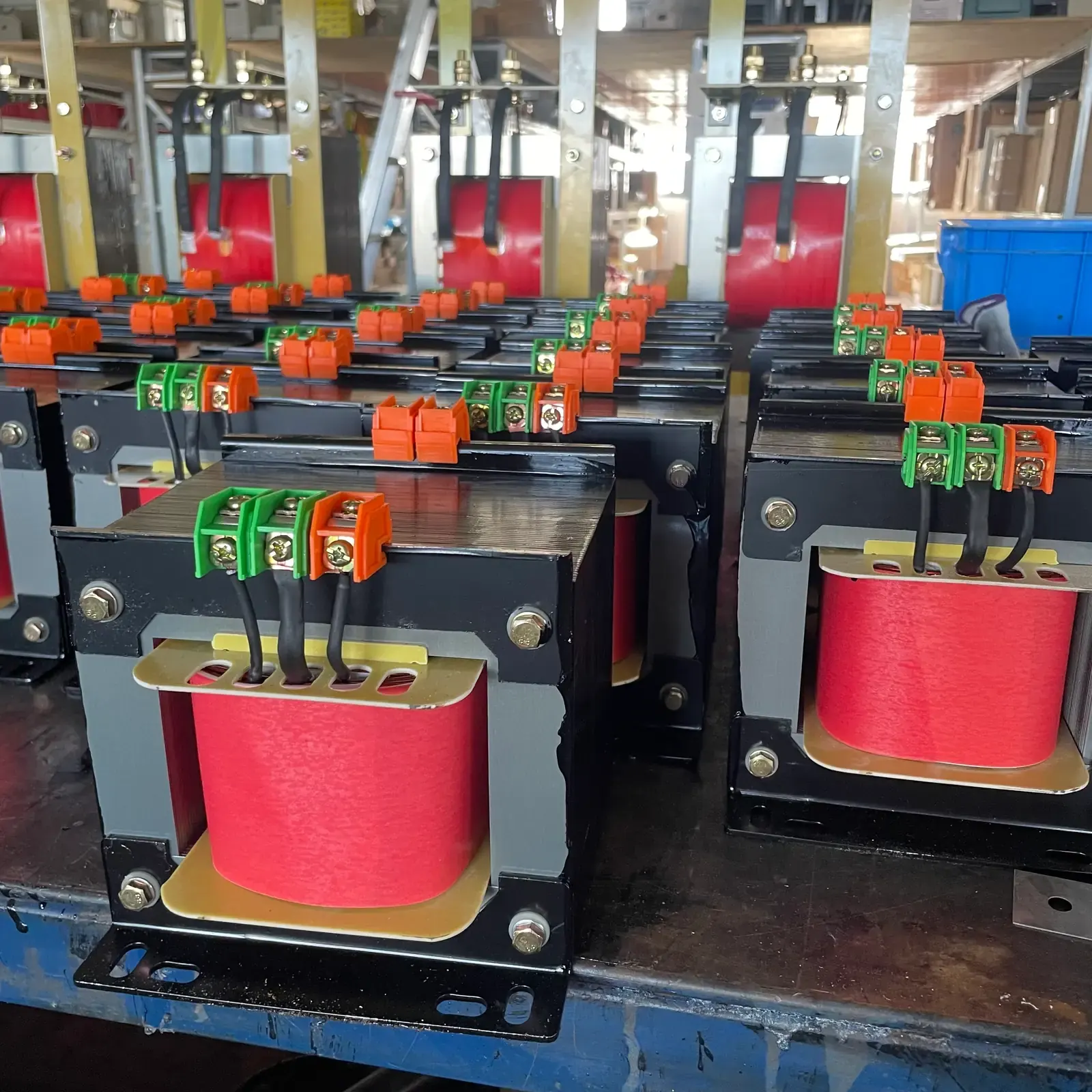
If you only hold a voltage or power number, a clear transformer quotation checklist still gets you comparable dry-type (air-cooled, oil-free) or mining transformer quotes. Send four site inputs—input voltage, output voltage, load power, and enclosure, dimension, and material requirements—and leave open design choices for the quote sheet. We build custom KKSG mining, three-phase SG, and isolation SG transformers, focusing on custom inquiries for Africa and Southeast Asia.
A first-time transformer quotation checklist separates confirmed site facts from open electrical design details. You only need four inputs to start a custom dry-type quote: input voltage, output voltage, load power, and enclosure, dimension, and material requirements. Mark unknown taps, impedance, and conductor details as open for the quotation sheet to state.
Every custom dry-type quote starts with four facts from your site. First is the live supply voltage at your panel. Second is the output voltage your machines need. Third is load power—known kVA (apparent power, the total capacity a transformer carries) or raw machine kW (active working power). Fourth is your enclosure, size, and shell material need.
International enquiry standards follow that same baseline. IEC 60076-1 Annex A.1.1 lists key enquiry fields: governing standard, transformer type, phases, frequency, IEC 60529 protection, placement, cooling, power, voltages, taps, earthing, connection, and size limits. Keep one scope rule in mind: IEC 60076-1 applies to dry-type units only where IEC 60076-11 cross-references it.
Small units need explicit details too. IEC 60076-1 excludes single-phase units below 1 kVA and three-phase units below 5 kVA. For small control transformers, list your exact electrical specs instead of citing a standard code alone.
State which standard governs your RFQ (Request for Quotation, the spec sheet sent for pricing). Under IEC 60076-1 Subclause 4.1, IEC defines rated power as apparent power input, including internal absorption. By contrast, U.S.-tradition standards (ANSI/IEEE C57.12.00, noted in IEC 60076-1) define rated kVA as deliverable secondary output. Naming IEC or ANSI keeps quotes on one yardstick.
Use this two-column table for your first RFQ. Put verified site numbers on the left. Mark open design choices as factory to propose with assumptions on the right.
| RFQ Category | Confirmed Site Inputs You Provide | Open Items for the Quote Sheet |
|---|---|---|
| Core electrical | Supply line-to-line voltage, frequency, output voltage(s), phase count | Connection symbol, neutral tap details, ratio tolerance |
| Load and duty | Known kVA or raw machine kW (continuous, standby, future) | Power factor assumption, final kVA, temperature-rise class |
| Enclosure & space | Open core or box, IP preference, net clear space, doorway limit, material | Outer dimensions, approximate mass, louver and terminal layout |
| Site & documents | Altitude, peak room heat, dust/water, non-coal mining status, KY or test list | Applicable IEC/GB clauses, thermal de-rating notes |
| Commercial basics | Quantity (MOQ 1 unit), crate or carton packing, port/city, target arrival | Lead-time start trigger, wooden crate or carton details |
Have machine sheets or panel photos without an engineer’s final kVA or impedance? Don’t guess missing numbers or leave blanks. Writing factory to propose with assumptions stops silent under-sizing and keeps quotes easy to compare.
Our minimum order is 1 unit with no sampling fee. No sampling fee means no separate sampling fee on a single custom order; production units are still purchased, not free samples.
Our indicative custom lead time is 7 to 15 days, packed in wooden crates or cartons. Add your destination port or city on the RFQ, and confirm when the schedule clock starts and how crating is handled for your build.
Our units carry a one-year warranty starting from receipt of goods, backed by remote video and online technical guidance. Also note unusual sea transit or humid storage conditions on your RFQ. IEC 60076-11 Subclause 5.3 calls on buyers to flag non-standard transport and storage limits at enquiry.
For mining jobs, see our mining dry-type transformers range, or review our custom dry-type transformers page for custom ordering details. Copy the five-row checklist into your draft inquiry email and fill only the site facts you already hold.
List the exact line-to-line supply voltage, required output voltage(s), phase count, and frequency straight from site labels. Under IEC 60076-11:2018 Subclause 5.1, nameplate ratings hold when applied primary voltage matches rated voltage at rated frequency under steady loading within temperature-rise limits.
Industrial three-phase panels commonly show two voltages split by a slash, like 380Y/220 V. The higher number (380 V) is line-to-line voltage across two live phases. The lower number (220 V) is line-to-neutral voltage from one phase to neutral.
Mixing those two up leads to an expensive winding-ratio mismatch. Ordering a transformer around the lower line-to-neutral figure when the incoming supply is higher across phases gives the wrong secondary voltage and forces a reorder.
Write both phase count and measurement basis—for example, 380 V three-phase line-to-line—and state if your load needs a neutral wire. To check whether your job needs a step-up, step-down, or isolation build, read our step-up vs. step-down transformer guide.
When a nameplate shows two voltages on one side, copying digits alone leaves a critical gap. Compare two of our factory nameplates:
| Nameplate Field | KKSG-30KVA Example (Three-Phase) | KKDG-5KVA Example (Dual-Voltage) | What to Write on Your RFQ |
|---|---|---|---|
| Rated capacity | 30 kVA | 5 kVA (total unit rating) | State total kVA or raw machine kW |
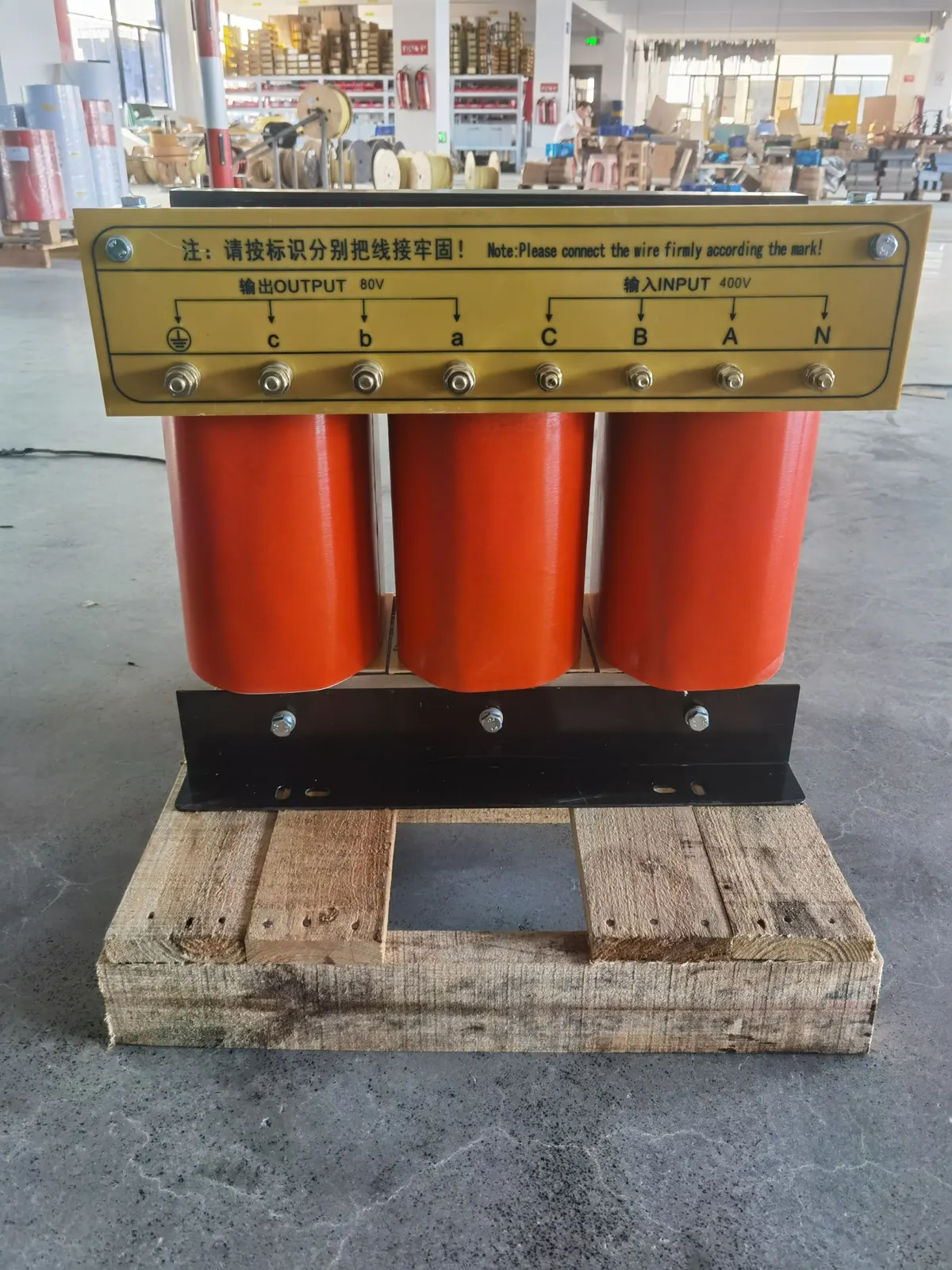
| Input voltage | 660 V | 660 V, 380 V | State which supply voltage is live |
| Output voltage | 380 V | 220 V, 36 V | State simultaneous use and kVA split |
| Frequency | 50–60 Hz | 50–60 Hz | Confirm exact local grid (50 Hz or 60 Hz) |
| Connection | Y/Y | I/I | Copy for direct replacement, or leave open |
Look closely at the KKDG-5KVA unit. Its nameplate lists 5 kVA total rating with 220 V and 36 V outputs, without splitting capacity per output. Dual outputs don’t mean each winding delivers a full 5 kVA at once. Whenever you request two outputs, state how much load each output runs simultaneously.
See slashed voltages or multiple taps on site? Snap clear phone photos of the incoming panel label and every machine plate, and attach them to your table. Note which supply voltage is live and whether you need a neutral wire. For full field-by-field plate reading, use our transformer nameplate guide.
Three extra electrical details affect winding design when grid power varies:
Attach your incoming panel photo and machine voltage labels to your draft sheet next.
When you only have machine nameplate kW without power factor, send the raw kW list grouped into continuous, standby, and future loads, and leave power factor open. Under IEC 60076-11:2018 Subclause 5.2.1, rated power covers continuous steady loading, so lumping backup and future machines together inflates transformer size and cost.
A motor’s stamped kW doesn’t equal the transformer kVA it draws. Power factor (PF) is real working power (kW) divided by apparent power (kVA). Efficiency ratings are usually stated at PF = 1.0, while real distribution loads typically run below 1.0 because inductive machines draw magnetizing current.
Two electrical gaps explain why. First, steady-state motor equations treat nameplate kW as mechanical shaft output (Pout). Electrical input (Pin = Pout / efficiency) and apparent demand (kVA = Pin / power factor) are higher. Second, in single-phase or per-phase sinusoidal AC circuits, average real power is Pave = Irms × Vrms × cos φ. Purely reactive loads return their energy each half-cycle, yet they still draw RMS current through the transformer.
Power factor also shifts with load, so guessing one constant misses the mark. U.S. DOE motor load guidance notes that most motors are designed to run between 50% and 100% of rated load, with maximum efficiency usually near 75%. Below 50% load, reactive magnetizing current pulls power factor down.
In one field test of a single 40-hp motor at 22.9 kW electrical input, phase power factors measured 0.75, 0.78, and 0.76—averaging 0.763. That single-motor reading shows why real power factor shifts away from nameplate assumptions. Send raw machine kW and mark power factor open; swap in the measured PF once your motor sheet arrives.
Here is how a buyer can structure a mine load list with only machine kW on hand. The rows below use example values—replace each line with your own nameplate figures.
| Machine (Example Values) | Nameplate Power | Power Basis | Duty Group | Starter / Load Type | Power Factor |
|---|---|---|---|---|---|
| Primary crusher motor | 15 kW | Mechanical shaft kW | Continuous (runs daily) | Direct-on-line (DOL) | Unknown — state assumption |
| Main dewatering pump #1 | 7.5 kW | Mechanical shaft kW | Continuous (runs daily) | Soft starter | Unknown — state assumption |
| Backup dewatering pump #2 | 7.5 kW | Mechanical shaft kW | Standby (never with #1) | Soft starter | Unknown — state assumption |
| Belt conveyor drive | 4 kW | Electrical input kW | Continuous (runs daily) | VFD (variable frequency drive) | Unknown — state assumption |
| Workshop lighting & sockets | 3 kW | Electrical input kW | Single-phase auxiliary | Single-phase 220 V | Unknown — state assumption |
Backup pump #2 sits on a standby row so the quote won’t size for two pumps running together. The crusher flags its direct-on-line starter, and the conveyor flags its VFD (an electronic speed drive that adds harmonic current).
Four load traits reshape transformer sizing—note each one beside its machine row:
For step-by-step kVA formulas including motor-starting dip, see our transformer sizing guide. Once you have an estimated kVA, check breaker and cable amps with our kVA to amps conversion guide. Fill in your machine kW rows with duty and starter tags right inside your draft table.
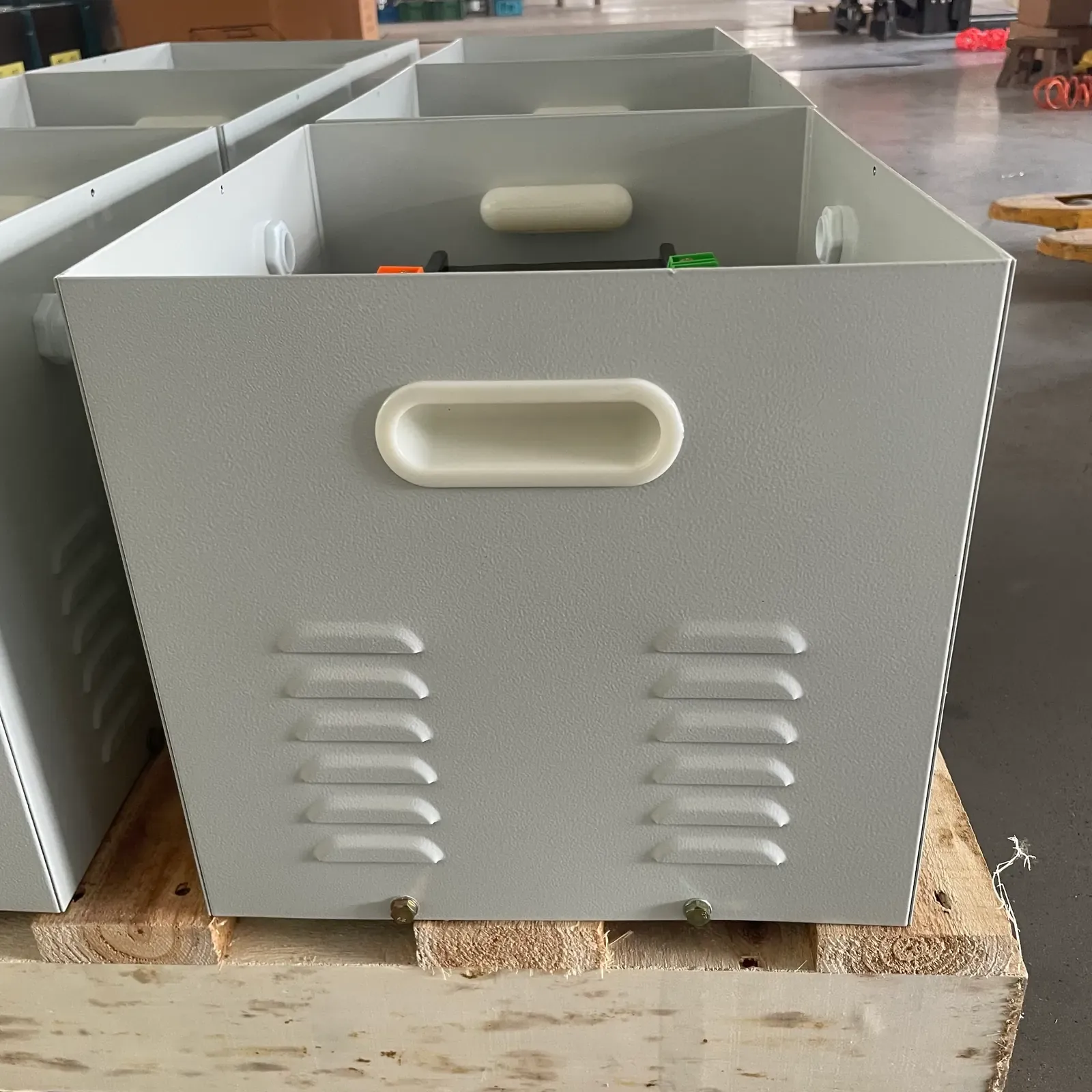
Send your room or cabinet net clear dimensions, tightest delivery doorway, cable-entry side, enclosure form, IP preference, and shell material so the unit fits and cools properly. Under IEC 60076-11:2018 Subclause 5.2.4, a transformer built, tested, and delivered inside its factory enclosure carries no rated-power de-rating. Boxing an open core later triggers thermal de-rating and shifts rating responsibility.
Skip vague labels like with metal box. Name one of the three enclosure forms in IEC 60076-11:2018 Clause 3:
Buying an open core and fabricating a cabinet locally can look cheaper until heat builds up. Under IEC 60076-11 Subclause 5.2.4, a factory-enclosed unit carries zero enclosure de-rating. Putting an open unit inside a separate box later requires thermal de-rating per IEC 62271-202 or Annex C, and the party adding the box takes rating responsibility. Which form suits your site is its own equipment decision; whichever you pick, name it on your RFQ so the quote matches the build.
IP (Ingress Protection) is a two-digit code showing solid-object and water protection. Per IEC’s IEC 60529 overview page, the first digit covers solid objects: 0 means no protection, and 2 blocks objects above 12.5 mm plus fingers. The second digit covers water: 0 means none, 1 blocks vertical drips, and 2 blocks drips at up to 15 degrees of tilt.
| IP Code | Solid Protection (First Digit) | Water Protection (Second Digit) | RFQ Design Impact |
|---|---|---|---|
| IP00 | 0 — no enclosure protection | 0 — no water protection | Open core for dry, restricted electrical bays |
| IP20 | 2 — objects >12.5 mm & fingers | 0 — no water protection | General indoor industrial rooms with dry ceilings |
| IP21 | 2 — objects >12.5 mm & fingers | 1 — vertically dripping water | Top drip shield over ventilated louvers |
| IP22 | 2 — objects >12.5 mm & fingers | 2 — drips up to 15 degrees of tilt | Angled drip protection; tighter louver airflow |
Higher IP shields restrict natural airflow. Pair your IP preference with shell material—such as painted steel or stainless steel—so the factory sizes ventilation to match.
Picture a crated transformer arriving at an underground substation, stalling at a narrow steel doorway—or backing flush against a concrete wall with blocked louvers. IEC 60076-1 Annex A.1.1(p) and A.1.2(h), (j) call on buyers to declare transport, size, and mass limits. Flag airflow restrictions and space caps affecting clearances and terminals too.
Two practical layout checks help prevent overheating and maintenance bottlenecks once the unit reaches site:
Measure the narrowest doorway, corridor turn, or crane hook along the delivery path—not just the concrete pad. Note wall-adjacent sides and where cables enter. The table below uses example measurements; swap in your own tape-measure readings.
| Space & Enclosure Field | Example Buyer Entry (Replace With Site Readings) | Why the Factory Needs It |
|---|---|---|
| Final bay clear space (L × W × H) | 1,400 mm × 1,000 mm × 1,600 mm | Confirms outer housing plus airflow clearances fit |
| Narrowest doorway / route limit | 850 mm wide × 2,000 mm high; no crane | Confirms delivery passes through the room entrance |
| Wall-adjacent sides | Back against wall; front opens to aisle | Keeps cooling louvers and service doors unblocked |
| Cable / busbar entry side | Bottom entry for incoming and outgoing cables | Places terminals and glands over your cable trench |
| Enclosure form, IP & material | Enclosed ventilated, IP22 preference, painted steel | Lets the quote match the enclosure build and shell material |
Walk the route from unloading bay to pad with a tape measure and add those five lines to your RFQ.
Declare any site condition outside normal IEC limits—altitude above 1,000 m, ambient air above +40 °C or below -25 °C, restricted airflow, dust, or dripping water. For mining jobs, state clearly whether the site is a non-coal, non-hazardous area and whether you need a KY certificate or specific factory tests. Unstated factors default to normal conditions.
IEC 60076-1 Subclause 1.2.1 (cross-referenced by IEC 60076-11 Subclause 4.2) sets these two normal service limits that most often affect RFQs. Normal altitude stays at or below 1,000 m (3,300 ft), and normal ambient air stays between -25 °C and +40 °C.
Whenever your site crosses either limit, IEC 60076-11:2018 Subclause 5.3 calls on you to declare unusual service conditions in the RFQ. That list covers extreme ambient temperatures, restricted ventilation, high altitude, dripping water, heavy humidity, conductive pollution, salt spray, abrasive or excessive dust, load harmonics, and vibration.
Quote the peak temperature inside your switchroom, container, or underground chamber—not outdoor weather forecasts. Ask site maintenance for the hottest afternoon shift reading and note if exhaust fans run there.
Low-voltage and mining dry-type units sit outside standard medium-voltage scope, so name your governing standard explicitly. IEC 60076-11:2018 Clause 1 covers dry-type units up to 72.5 kV with at least one winding above 1.1 kV. It excludes flameproof and mining transformers, single-phase units below 5 kVA, and polyphase units below 15 kVA (allowing whole or partial reference where no dedicated IEC standard exists).
For mining jobs, confirm the hazard class before asking for pricing. China national standard GB/T 12173-2008 is officially titled Mining electrical apparatus for non hazardous area (published 2008-06-30). General-purpose mining transformers are built for non-hazardous areas—never explosive coal-mine environments.
KY (the mark on China’s general-purpose mining products) certificates stay tied to exact models, ratings, and IP classes. Compare three real KY certificates we hold:
| Certified Model Example | Certificate No. | Validity Window | Listed Rating & Phase | Certified IP | Permitted Site Environment |
|---|---|---|---|---|---|
| KKSG-50/1.2(0.693,0.4) | CMExC23.1645 | 2023-10-25 to 2028-10-24 | 50 kVA | IP22 | Non-coal chambers & main roadways free from dripping water and dust ingress |
| KKSG-630/1.2(0.693) | CMExC24.1859 | 2025-02-17 to 2030-02-16 | 630 kVA | IP21 | Non-coal chambers & main roadways free from dripping water and dust ingress |
| KKDG-50/0.693(0.4) | CMExC24.1858 | 2024-12-03 to 2029-12-02 | Single-phase 0.693(0.4) kV, 50 kVA | IP22 | Non-coal chambers & main roadways free from dripping water and dust ingress |
Two facts stand out right away. First, KKSG-50 and KKDG-50 carry IP22, while KKSG-630 carries IP21—IP protection varies by certified model rather than staying identical across capacities. Second, our KKDG-50 certificate covers that specific single-phase 50 kVA model and its named representative products, so coverage doesn’t extend automatically to custom builds.
Our factory states that KY mining safety certificates can be provided for custom-ordered mining transformers when requested in the RFQ. Before you order, check that the KY certificate offered covers your exact model, configuration, and site environment. For full mining-site checks and file verification, use our mining transformer selection guide.
Skip vague requests like all certificates and tests included—they leave cost and lead time unclear. IEC 60076-1 Clause 3.11 splits testing into three tiers: routine tests on every individual unit, and type tests on a representative design. Special tests are arranged specifically between buyer and manufacturer.
In our factory, our in-house workflow covers winding, varnishing, drying, assembly, wiring verification, inspection, and outgoing factory inspection. Attach your mine inspector’s or customs broker’s exact document list to the RFQ so every quote answers the same document list. To see what each standard test checks, read our transformer routine tests guide.
Add your peak switchroom temperature reading and inspector’s exact document checklist to your inquiry folder before the final check.
Before sending your transformer quotation checklist, verify five site inputs: voltages, raw grouped loads, clear space, ambient and mining limits, and required documents. Mark open electrical choices as factory to propose with stated assumptions. Splitting mandatory baseline inputs under IEC 60076-1 Annex A.1.1 from optional items under Annex A.1.2 keeps quotes comparable.
Non-electrical buyers don’t need to invent internal design parameters. IEC 60076-1 Subclause 1.1 stresses raising technical alternatives and deviations early so both sides put them in writing on the order specification. Meanwhile, IEC 60076-1 Annex A.1.2 places short-circuit impedance, ratio and impedance tolerances, acoustic sound levels, and special tests in an optional list separate from baseline fields.
State the tapping you need as listed in the voltage section above. If you don’t know it, mark taps factory to propose with stated assumptions and ask the quote to list the tapped winding, tap count, and range. Under IEC 60076-1 Annex A.1.1(k), a tapping range wider than ±5% also requires stating voltage-variation type and maximum-current tapping. Leave impedance, winding conductor, insulation class, and losses open without a fixed spec. Add one closing line to your RFQ asking the quotation sheet to state tapping details, winding conductor material, insulation class, enclosure IP, included accessories, and sizing assumptions.
One domestic China copper-mine order we handled centered on three core parameters: 660 V to 380 V, 30 kVA, and 10 units. Those numbers open the quote, while an accurate build still adds enclosure form, clear space, material, site limits, non-coal mining boundaries, and needed KY or test files.
For custom mining sizing reference, we have previously produced 20 KKSG capacity steps from 1 to 630 kVA. Treat those 20 steps as a custom sizing reference and list them next to your site voltages and load list.
Run these five quick steps before sending your inquiry:
To check how single-unit custom ordering and delivery fit your project, visit our custom dry-type transformer service page.
If we were preparing a first-time transformer quotation checklist from your seat, we’d lock confirmed site facts in five clear steps:
Two situations flip this sequence right away. If your site is a hazardous coal mine with explosive gas or coal dust, stop general-purpose mining RFQs and switch to certified explosion-proof equipment. If you plan to put an open core inside a local cabinet, declare that retrofit up front so thermal de-rating is designed before production.
Put your panel photo, raw machine kW table, room and doorway measurements, peak room temperature, and document list into one clean folder so your RFQ is ready to go.