Get Marketing Insights First
Subscribe to receive actionable strategies, growth tips, and industry insights delivered straight to your inbox.
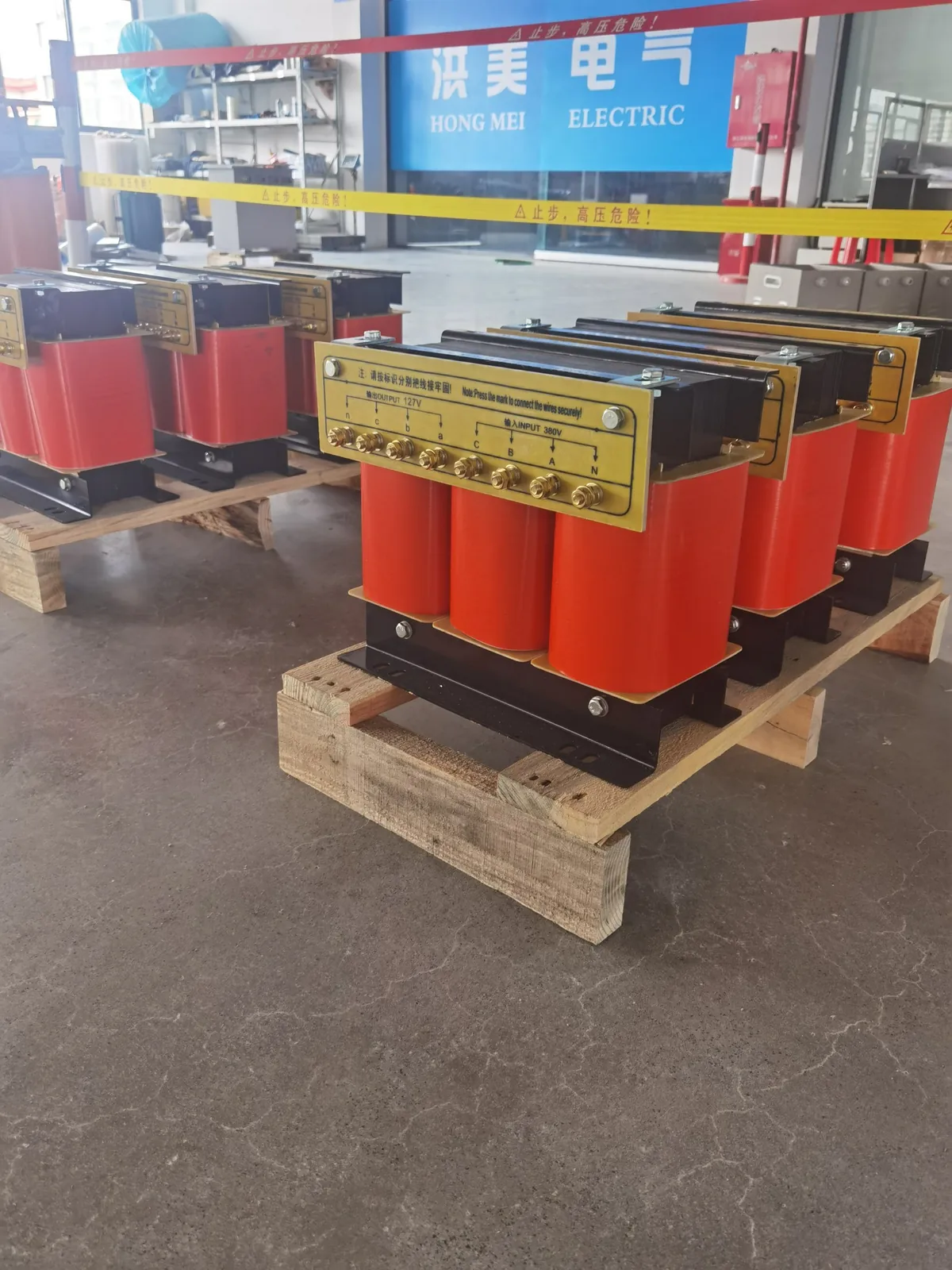
When you’re sizing a transformer circuit or preparing a quote, convert kVA to amps with I = kVA × 1000 / V for single-phase circuits. For balanced three-phase circuits, use I = kVA × 1000 / (√3 × VLL). On our Hongmei KKSG-30KVA sample rated at 30 kVA (660 V input, 380 V output, Y/Y), the 660 V input side calculates to 26.24 A per line.
A single-phase transformer converts kVA to amps using I = kVA × 1000 / V. A balanced three-phase transformer uses I = kVA × 1000 / (√3 × VLL), where I is current in amperes and VLL is same-side line-to-line voltage. Multiplying kVA by 1000 turns kilovolt-amperes into volt-amperes so the division returns amps directly.
Apparent power (kVA) is the total electrical capacity a transformer carries. Both formulas use RMS (root mean square) AC values—the steady effective voltage and current ratings printed on transformer nameplates. Rated current gives you the continuous full-load baseline under balanced conditions, ready for cable or breaker checks.
Let’s walk through a real nameplate to see the numbers in action. Our Hongmei KKSG-30KVA sample is marked 30 kVA, 660 V input, 380 V output, and Y/Y for three-phase connection. Entering 30 kVA and 660 V line-to-line input voltage gives 30 × 1000 / (√3 × 660) = 26.24 A per line. That 26.24 A figure belongs to the 660 V input side under balanced rated conditions. Checking the 380 V output side uses the output voltage instead.
We’ve built KKSG transformers across the nine kVA capacities below. Each column calculates rated current at a stated voltage and phase so you can pull a quick reference figure on the spot.
| Capacity (kVA) | Three-phase 380 V line-to-line (A) | Three-phase 660 V line-to-line (A) | Three-phase 1140 V example (A) | Single-phase 220 V (A) |
|---|---|---|---|---|
| 1 | 1.52 | 0.87 | 0.51 | 4.55 |
| 3 | 4.56 | 2.62 | 1.52 | 13.64 |
| 5 | 7.6 | 4.37 | 2.53 | 22.73 |
| 10 | 15.19 | 8.75 | 5.06 | 45.45 |
| 30 | 45.58 | 26.24 | 15.19 | 136.36 |
| 50 | 75.97 | 43.74 | 25.32 | 227.27 |
| 100 | 151.93 | 87.48 | 50.64 | 454.55 |
| 315 | 478.59 | 275.55 | 159.53 | 1431.82 |
| 630 | 957.19 | 551.11 | 319.06 | 2863.64 |
The nine rows list KKSG capacities we’ve built in the past. The four voltage-phase columns—including the single-phase 220 V reference column—are calculation inputs only, not a list of stocked or ready-built combinations. The 380 V, 660 V, and 220 V figures come from our sample nameplates, and the 1140 V column provides a higher-voltage example. Every three-phase column assumes balanced loading with same-side line-to-line voltage, giving calculated rated current for steady-state reference. If your project sits between rows, drop your exact kVA and circuit voltage straight into the formula above.
Converting kVA directly to amps needs just two inputs: kVA and voltage. Power factor is the ratio of real working power (kW) to apparent power (kVA). You bring power factor into the math when starting from equipment rated in kW so you can find kVA first.
Because kVA already reflects RMS voltage and current directly, multiplying by power factor or efficiency would throw off your ampere result. The √3 factor reflects balanced three-phase geometry directly.
Once you have a starting current figure from kVA, lock down your transformer’s exact phase arrangement and voltage side next.
Every kVA-to-amps calculation starts with two confirmed inputs: your circuit phase (single-phase or three-phase) and the exact side voltage—input or output—whose current you need. Confirming both inputs first keeps your ampere figure aligned with the actual conductors you’re checking.
Picture standing beside a mine or workshop distribution panel where the site supply reads 660 V and a new machine calls for 380 V. Entering the opposite side’s voltage—or assuming 380 V always means three-phase—sends your cable and breaker checks down the wrong track before quoting even begins.
Single-phase circuits move power across one pair of conductors, while balanced three-phase circuits share power evenly across three live lines. Each circuit type takes a specific voltage entry in a single phase and three phase kVA current calculation.
| Circuit you’re checking | Voltage to enter | Current the formula returns |
|---|---|---|
| Single-phase (I/I) | Voltage across that single-phase circuit | Current in that circuit |
| Balanced three-phase (Y/Y) | Line-to-line voltage on the chosen side | Current in each line |
Check the connection symbol alongside every voltage figure. Our Hongmei KKDG-3KVA sample nameplate lists a 380 V input with an I/I single-phase connection, showing that 380 V can be single-phase. By contrast, our Hongmei KKSG-30KVA sample lists 660 V input, 380 V output, and a Y/Y star-star connection for three-phase service. If you’re checking markings from a label photo, our guide on how to read a transformer nameplate walks through every field.
Line-to-line voltage is measured between two live line conductors, while phase voltage in a star winding runs from one line to neutral. Because the balanced three-phase formula uses line-to-line voltage and divides by √3, use the result directly as the rated current per line. Under unbalanced loading, the line currents differ, so one total-kVA calculation gives only the balanced rated baseline, not each line’s actual current.
Input and output voltages on the same step-down or step-up transformer yield different rated currents because the same apparent power flows at a different voltage on each side. Our Hongmei KKSG-30KVA sample carries 30 kVA with a 660 V input and 380 V output. Under balanced three-phase loading, entering its 380 V output gives 30 × 1000 / (√3 × 380) = 45.58 A per line—higher than its input line current.
A quick habit saves costly sizing mix-ups: write input line-to-line or output line-to-line right next to every voltage before you calculate. That simple tag keeps primary current separate from secondary cable and switch checks. For three-phase voltage matching between plant supply and equipment, you can also review our three-phase dry-type transformers.
Here’s how rated current moves with voltage, using our Hongmei KKSG-30KVA sample (30 kVA, 660 V balanced three-phase input) as the example. Swap in your actual panel voltage once you measure it on site. At 30 kVA balanced three-phase, 525 V line-to-line gives 32.99 A per line, and 1000 V line-to-line gives 17.32 A per line. Both calculation examples show how rated line current drops as balanced mining supply voltage rises.
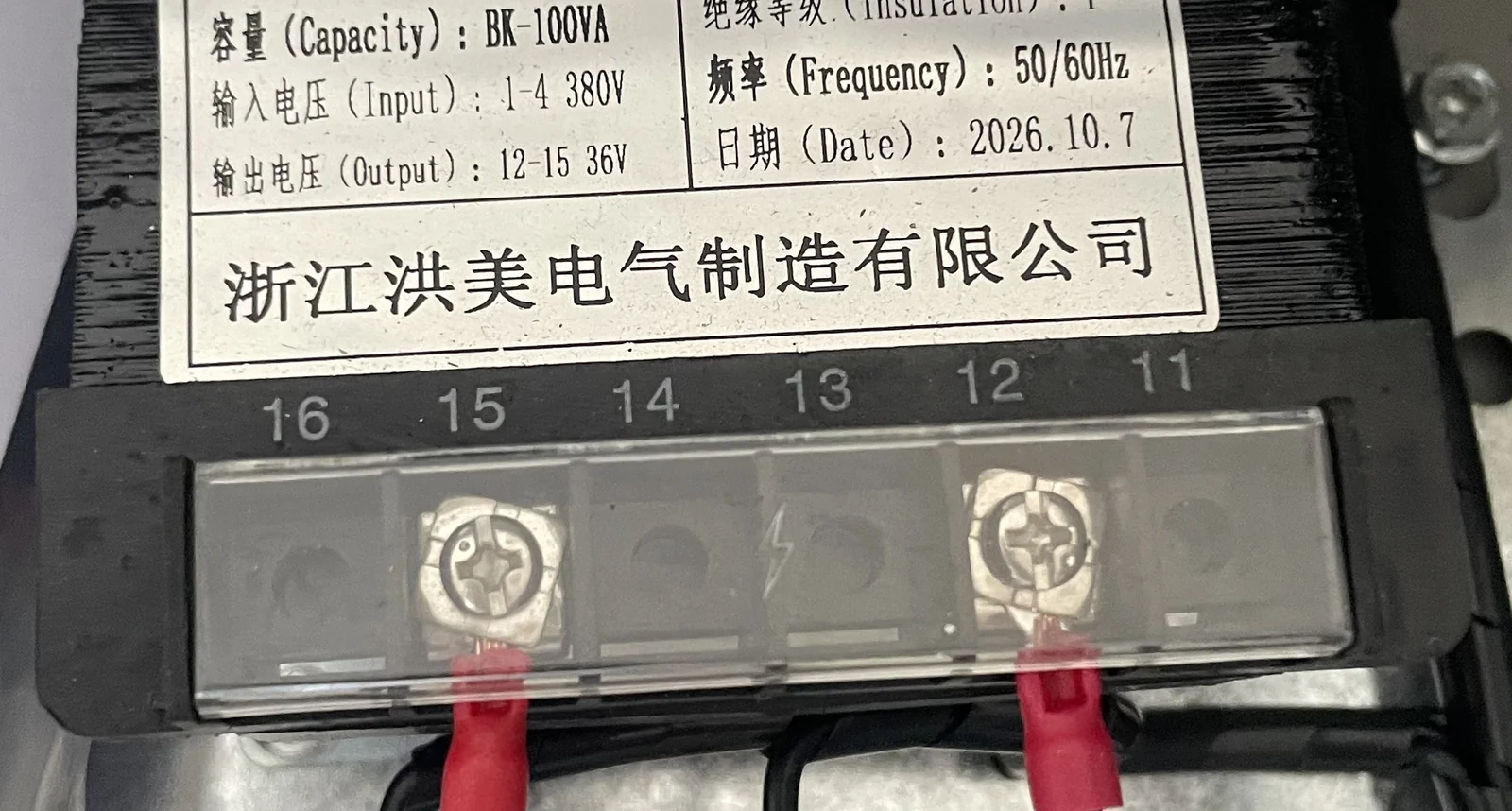
Partial terminal photos show why checking the complete nameplate matters. In two sample terminal-board photos, one cylindrical board shows 380 V input alongside N (neutral), 36 V, and 220 V outputs with no full model or kVA plate visible in the photo. A cabinet terminal board shows 660 V input and 400 V output markings on their own. Always match terminal markings to that unit’s complete nameplate and wiring diagram so you calculate from confirmed capacity and phase data.
With your circuit side labeled and full nameplate confirmed, check any 36 V auxiliary or multi-output windings next.
Low-voltage and multi-output transformer calculations use the winding rating—the kVA capacity assigned to the exact output branch you plan to load—as your kVA input. Because current climbs sharply as voltage drops, even a compact 36 V auxiliary winding carries surprisingly heavy amps.
Voltage sits in the denominator of the single-phase kVA-to-amps formula, so stepping down to a 36 V output multiplies rated current for the same kVA. Our single-output Hongmei KKDG-1KVA sample (1 kVA, 36 V single-phase) calculates to 27.78 A. Our single-output Hongmei KKDG-3KVA sample (3 kVA, 36 V single-phase) calculates to 83.33 A.
| Hongmei sample nameplate | Rated capacity | Single-phase output voltage | Calculated rated output current |
|---|---|---|---|
| KKDG-1KVA | 1 kVA | 36 V | 1 × 1000 / 36 = 27.78 A |
| KKDG-3KVA | 3 kVA | 36 V | 3 × 1000 / 36 = 83.33 A |
Seeing 83.33 A come off a compact 3 kVA transformer shows why low-voltage lighting and control branches need the same sizing care as main power feeders. Always plug the exact 36 V secondary voltage into the formula so your feeder and terminal checks reflect the real current.
Multi-output nameplates print several voltages side by side, so confirm the kVA allocated to your target output branch before calculating its rated current. Our Hongmei KKDG-5KVA sample nameplate lists 660 V and 380 V inputs, 220 V and 36 V outputs, and an I/I single-phase connection alongside one total capacity figure. Similarly, our Hongmei KKSG-10KVA sample nameplate lists a 380 V input, 380 V and 220 V outputs, and a Y/Y three-phase connection in parallel markings.
Parallel voltage markings display listed voltages together while leaving each branch’s kVA share and simultaneous full-load rules to the wiring diagram and specification sheet. Checking that branch kVA allocation first keeps your ampere figure tied to the capacity your branch actually delivers.
Keep every printed voltage together in your notes and circle the exact output branch you plan to load. Put the branch kVA you need in your enquiry, and attach the wiring diagram if you have one, so cable sizing stays accurate. For industrial and general mining setups, you can explore our KKSG mining dry-type transformers.
Once your branch kVA and wiring diagram are confirmed, run a quick reverse calculation to double-check your arithmetic.
To convert amps to kVA on the same transformer side, multiply voltage and current and divide by 1000. Use kVA = V × I / 1000 for single-phase circuits. For balanced three-phase circuits, use kVA = √3 × VLL × IL / 1000, where IL is line current and VLL is line-to-line voltage.
Suppose you want to cross-check a single-phase circuit using the 220 V input printed on our Hongmei KKDG-1KVA sample with an example current of 10 A. Multiplying those two values and dividing by 1000 gives 220 × 10 / 1000 = 2.2 kVA. Here, 10 A is an arithmetic example chosen for this walkthrough—not a current rating for that KKDG-1KVA sample or a field reading.
Plugging your calculated amps back into the matching amps-to-kVA formula catches decimal slips and rounding errors in seconds. You’ll return right to your starting kVA within normal rounding precision. In three-phase circuits, this reverse check applies under balanced loading across all three phases. Entering a mismatched phase or wrong voltage side in both directions still cancels out to the same kVA. Always confirm phase and circuit side straight from the nameplate and drawings before ordering.
With your arithmetic verified in both directions, pull your confirmed numbers into a single quote checklist next.
Turning a kVA-to-amps result into an accurate transformer order takes four steps in order. Tag every ampere figure with its phase and side, confirm branch kVA on multi-output labels, separate rated current from final sizing checks, and compile one complete specification sheet.
Putting the nameplate details, target output branch, and enclosure requirements on one sheet lets us quote from your real circuit.
At Hongmei, we quote custom mining dry-type transformers—air-cooled transformers built without oil for industrial and mining power systems—from your confirmed voltage, power, and enclosure specs. Our minimum order is 1 unit with no sampling fee, and our stated custom lead time is 7 to 15 days. To browse unit styles before pulling your sheet together, take a look at our KKSG mining dry-type transformers.
With your phase, same-side voltage, target output kVA, and enclosure specs grouped on one sheet, your kVA-to-amps math is ready to turn into a clean custom quote.
Prepared by Hongmei. Based on 3 cited sources listed in References. Content date: 2026-11-22.