Get Marketing Insights First
Subscribe to receive actionable strategies, growth tips, and industry insights delivered straight to your inbox.
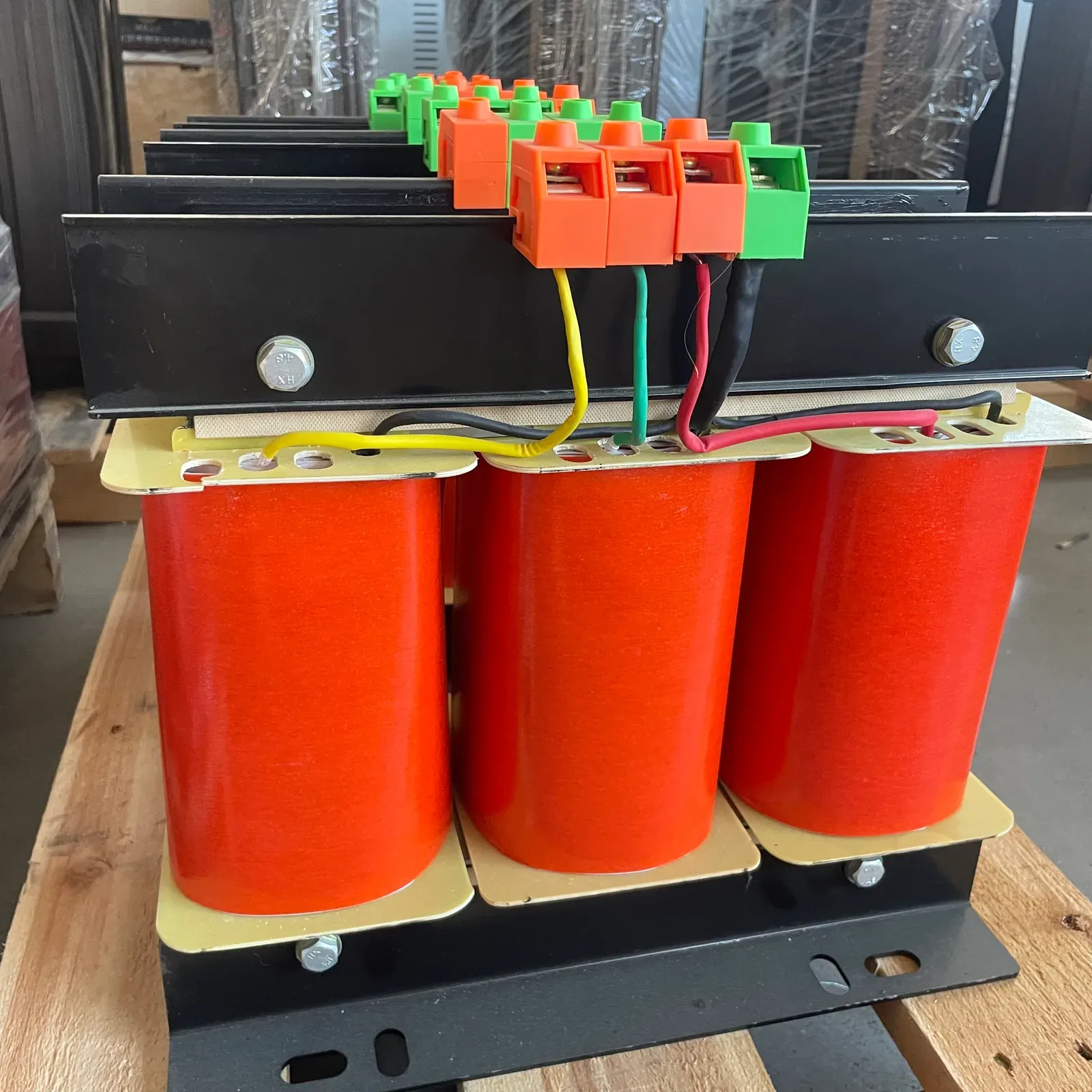
If you’re comparing a copper and an aluminum dry-type transformer quote at the same kVA (kilovolt-ampere) rating, neither metal wins every job. Copper fits fixed cabinets, copper-only tenders, or heavy loads with verified lower losses. Aluminum fits open spaces and tight budgets when both quotes meet equal efficiency and temperature-rise rules with aluminum-rated terminals.
A dry-type transformer (cooled by air instead of oil) performs reliably with either copper windings or aluminum windings at the same kVA rating. Your cabinet space, tender rules, and daily load cycle decide which quote makes better business sense.
Major dry-type standards set performance targets without mandating one metal. For 50 Hz projects, IEC 60076-11 (the international dry-type standard) covers units up to 72.5 kV with at least one winding above 1.1 kV. Units with all windings at or below 1.1 kV sit outside its formal scope. It also lists 11 excluded special categories without limiting the standard to one winding metal.
For 60 Hz North American projects, U.S. federal rules in 10 CFR 431.196 set one efficiency bar per kVA size from 2016-01-01 through 2029-04-22:
“The efficiency of a low-voltage, dry-type distribution transformer manufactured on or after January 1, 2016, but before April 23, 2029, shall be no less than that required for the applicable kVA rating in the following table.”
U.S. Department of Energy engineering analysis also recorded that aluminum windings grew more common alongside copper because of relative metal prices. Confirm both quotes match the same kVA apparent power rating before comparing details. You can review our Three Phase Dry Type Transformers range as you narrow your setup.
Use this table to see where copper windings and aluminum windings differ at equal kVA.
| Decision Factor | Copper Windings | Aluminum Windings |
|---|---|---|
| 20°C Resistivity & Equal-Resistance Area | 1.68 × 10⁻⁸ Ω·m pure-metal baseline at 20°C | 1.58 times copper’s pure-metal area at 20°C for equal DC resistance |
| Metal Density & Equal-Resistance Conductor Mass | 8,920 kg/m³ pure-metal density | 0.47 times copper’s conductor mass before core and enclosure weight |
| Standards & Minimum Efficiency Threshold | Same three-phase LV dry-type bar under U.S. 10 CFR 431.196 (2016–2029) | Same three-phase LV dry-type bar, such as 99.14% at 500 kVA and 35% load |
| Linear Thermal Expansion & Terminal Practice | 17 × 10⁻⁶ /°C linear expansion; mates cleanly with copper busbars | 1.47 times copper’s expansion rate; needs aluminum-identified connectors |
| Elastic Stiffness (Young’s Modulus) | 110 GPa Young’s modulus; 44 GPa shear modulus | 70 GPa Young’s modulus; 25 GPa shear modulus |
| Upfront Price vs. Load-Loss Payback | Higher upfront cost; pays back fastest on heavy loads with verified lower losses | Lower upfront cost; suits light or standby duty where squared loads shrink savings |
Sources: U.S. eCFR 10 CFR 431.196 and standard pure-metal 20°C reference constants (U.S. 60 Hz rules shown as a benchmark).
Common claim vs. evidence: Project teams sometimes assume only copper windings meet international standards. In reality, IEC 60076-11 sets voltage and test scope, while U.S. 10 CFR 431.196 holds copper and aluminum to identical efficiency bars.
Four practical rules turn that table into a clear call:
Read the owner’s technical specification and project tender before spending time on aluminum quotes. International standards accept both metals, yet private bid documents can still require copper.
Buyer tip: Search your tender PDF for copper winding and aluminum winding before asking for revised quotes. Confirm any mandatory copper clause up front before requesting aluminum alternatives.
Aluminum transformer windings need a larger cross-section because pure aluminum has higher electrical resistivity at 20°C: 2.65 × 10⁻⁸ Ω·m versus 1.68 × 10⁻⁸ Ω·m for pure copper. Matching copper’s DC resistance over the same length takes 1.58 times the cross-sectional area in pure aluminum, and slightly more in commercial alloy.
Electrical conductivity (how easily current flows through metal) shows the same gap at 20°C. Pure copper measures 5.95 × 10⁷ (Ω·m)⁻¹, compared with 3.77 × 10⁷ (Ω·m)⁻¹ for pure aluminum. Standard annealed-copper tables list copper at 1.72 × 10⁻⁸ Ω·m alongside 2.65 × 10⁻⁸ Ω·m for aluminum.
Internal heat transfer also favors copper’s smaller coil. Copper’s thermal conductivity is 390 W/(m·°C) versus 220 W/(m·°C) for aluminum, moving internal heat faster per unit area. Final transformer temperature rise still depends on coil surface area, cooling ducts, and cabinet airflow.
A smaller copper coil doesn’t guarantee a smaller outer cabinet on your floor. In U.S. Department of Energy optimization modeling, unit geometry varied with optimal core and coil sizing while certain enclosure dimensions stayed fixed across design lines. Two quotes can ship in the same outer box unless the cabinet itself is sized down.
Picture rolling a replacement unit through a narrow electrical-room doorway onto an existing steel skid. If the aluminum enclosure exceeds the doorway width, panel rework or concrete work can cost more than copper’s premium. If both quotes show identical L×W×H outer dimensions, extra copper spend buys zero floor space.
Watch thermal de-rating closely when fitting a tight panel. Under IEC 60076-11 Clause 5, a transformer’s nameplate rating holds under steady loading within temperature-rise limits.
Putting an untested open body inside a separate tight cabinet requires checking clearances and thermal de-rating. Airflow paths and cabinet cooling belong in a separate ventilation check, so never seal a compact body inside an undersized box without de-rating.
Buyer tip: Place each quote’s outer L×W×H dimensions beside your doorway width, base-bolt pattern, and side clearance. You should also verify whether those dimensions describe an open body or a full enclosed cabinet before signing off.
An equal-resistance aluminum winding conductor weighs about 0.47 times as much as copper, roughly half, not 70% less. Once you add the steel core, clamps, and outer cabinet, total dry-type transformer weight drops by noticeably less than half.
Raw metal density fuels the 70% myth. Pure aluminum measures 2,700 kg/m³ versus 8,920 kg/m³ for pure copper. Standard metal tables list 2.7 g/cm³ versus 8.3–9.0 g/cm³. By equal volume, aluminum is only 0.30 times as dense as copper.
Equal-resistance coils cut that gap immediately. Multiplying that 0.30 density ratio by aluminum’s 1.58 area factor puts the bare aluminum winding at about 0.47 times copper’s mass.
Complete unit hardware narrows the difference even more. U.S. Department of Energy engineering analysis counts every material and structural part in total unit weight, so conductor savings never scale one-to-one across the finished machine.
| Weight Layer | Copper Baseline | Aluminum Equivalent | Rigging & Freight Takeaway |
|---|---|---|---|
| Raw Metal Density (Equal Volume) | 8,920 kg/m³ | 2,700 kg/m³ (0.30 times copper) | Never size cranes or slabs from raw metal density |
| Equal-Resistance Winding Conductor | Copper mass baseline | 0.47 times copper mass (0.30 × 1.58) | Winding metal alone weighs about half as much |
| Complete Transformer Unit | Full core, coils, and hardware | Core, larger coils, and hardware (well below half saved) | Size cranes and floors from quoted total kg |
Sources: Standard pure-metal density constants and U.S. DOE 78 FR 23336 weight methodology.
Common claim vs. evidence: Calling an aluminum transformer 70% lighter confuses raw metal density with finished machine weight. Accounting for aluminum’s larger coil cross-section moves the bare winding from 0.30 to about 0.47 times copper’s mass, and the steel core and enclosure narrow total savings further.
On mezzanine decks, rooftops, or remote mine pads with light cranes, aluminum’s lower total weight still eases handling. Weigh that rigging advantage against the larger coil footprint and stricter terminal rules.
Buyer tip: Confirm whether each quote lists net core-and-coil weight or gross crated weight with the enclosure and wood packaging. Your team can then match the gross kg figure directly against forklift and floor limits before booking freight.
Copper transformer windings don’t automatically lower energy losses or extend service life when both quotes meet equal efficiency and temperature-rise rules. Designers enlarge aluminum’s conductor area to hit the same loss budget, so efficiency depends on the specification you order.
Every transformer has two steady-state loss buckets. No-load losses come from magnetic hysteresis and eddy currents in the steel core whenever energized, while load losses come from winding resistance under load current. Winding metal touches the load-loss term, while core iron governs no-load losses.
That is why U.S. DOE 10 CFR Part 431 (the North American 60 Hz federal efficiency rule) sets one minimum table for copper and aluminum dry-type units. Under 10 CFR 431.196(a)(2), the efficiency values for units built from 2016-01-01 through 2029-04-22 are set at 35% of nameplate load. Low-voltage dry-type tests reference 20°C for no-load loss and 75°C for load loss, while medium-voltage dry-type uses 50% load and 75°C.
| Three-Phase LV Dry-Type Rating (kVA) | Statutory Minimum Efficiency (60 Hz, 35% Load, 75°C Ref.) | Applies To |
|---|---|---|
| 45 kVA | 98.40% | Both copper and aluminum designs |
| 150 kVA | 98.83% | Both copper and aluminum designs |
| 500 kVA | 99.14% | Both copper and aluminum designs |
| 1,000 kVA | 99.28% | Both copper and aluminum designs |
Sources: U.S. eCFR 10 CFR 431.196(a)(2) (2016–2029 table, U.S. 60 Hz benchmark).
For 50 Hz mines and plants in Africa or Southeast Asia, treat U.S. efficiency numbers strictly as a metal-neutral benchmark. Under 10 CFR 431.192, mandatory U.S. rules cover only 60 Hz distribution transformers. Dry-type coverage spans 15–5,000 kVA with input up to 34.5 kV and output up to 600 V. The rule also exempts 13 specialty types, including autotransformers, drive isolation units, machine-tool control units, and sealed units.
On 50 Hz projects, buyers look to IEC 60076-11 (the international dry-type standard) as the engineering reference. Watch two thermal ratings closely: temperature rise (allowable winding heating above ambient air) and insulation thermal class (the insulation system’s maximum rated operating temperature). Service life hinges on staying within those thermal limits, not on metal name alone.
Two IEC 60076-11 rules protect buyers from thermal surprises:
Buyer tip: Check the reference temperature and test standard printed above any loss figures. Losses stated at a cooler temperature look smaller on paper than losses corrected to 75°C, so align both quotes to one standard first.
You keep aluminum transformer terminals safe by never clamping bare aluminum directly against copper in an unrated lug and by verifying aluminum-identified connectors before energizing. Aluminum’s coefficient of thermal expansion measures how much a metal expands per degree of heating. It sits at 25 × 10⁻⁶ /°C for aluminum, versus 17 × 10⁻⁶ /°C for copper and 12 × 10⁻⁶ /°C for steel. Other 20°C metal tables list 24, 17, and 13 × 10⁻⁶ /°C.
Per degree of heating, aluminum expands 1.47 times faster than copper and roughly twice as fast as a steel bolt. Repeated load-heating cycles gradually deform softer aluminum under clamping pressure (called thermal creep), loosening uncompensated bolted joints over time.
Two surface effects compound a loose joint. Bare aluminum quickly forms a thin, electrically insulating aluminum oxide skin in air, raising contact resistance. When bare copper and aluminum touch in damp air, galvanic corrosion (an electrochemical reaction between dissimilar metals) erodes the aluminum face and drives up heat.
Follow these verified industrial termination and maintenance rules on aluminum windings:
Picture a coastal switchgear room during Southeast Asia’s rainy season, or an open-pit mine power room in southern Africa coated in fine dust. In either room, an unprotected copper-on-aluminum clamp draws moisture or conductive dust right into a cycled joint, turning a field shortcut into a burned terminal block.
If your plant uses copper feeders and crews rarely inspect harsh rooms, copper windings simplify wiring by removing dissimilar transitions. If you pick aluminum for budget or weight savings, verify marked bimetallic connectors at receiving and keep dust cleaning scheduled.
Buyer tip: Check the material stamping on every lug with a flashlight before electricians land site cables. If your site runs copper cables and transition lugs are missing, source rated bimetallic hardware before installation day.
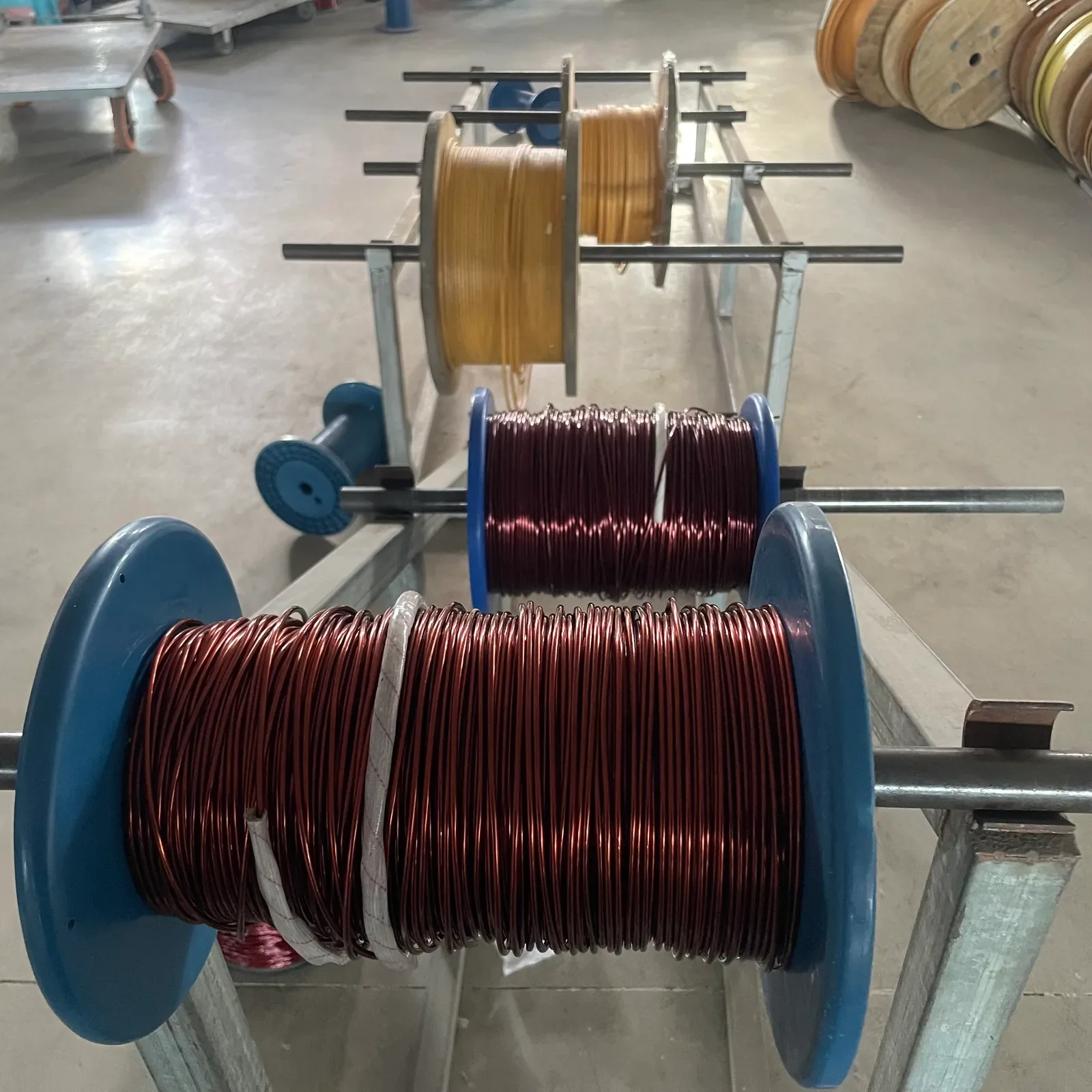
Copper windings offer higher material stiffness under electromagnetic fault forces because pure copper has 1.57 times the elastic stiffness of pure aluminum. Pure copper carries a 110 GPa Young’s modulus and 44 GPa shear modulus, versus 70 GPa and 25 GPa for pure aluminum. For harsh duty such as mine crushers, ball mills, and high-fault feeders, copper’s higher stiffness is an advantage.
During an external short circuit or direct-on-line motor start, surge currents push radial and axial forces against the coils. Short-circuit withstand is a transformer’s ability to survive those mechanical and thermal stresses without permanent deformation. Copper’s higher stiffness helps an equal cross-section resist flexing under repeated shocks.
Winding structure matters alongside metal stiffness. Because an equal-resistance aluminum winding uses a larger cross-section, coil geometry and clamping strongly shape fault survival. Dry-type builders use sheet-wound (foil) coils with rigid end-clamping blocks so current balances evenly along the coil height, reducing axial displacement forces compared with loosely braced wire turns.
Ordering copper doesn’t automatically include a factory short-circuit test certificate. Under IEC 60076-11 Clause 14, ability to withstand short-circuit is a special test, not a default routine test on every transformer. High-fault projects must specify it in the purchase contract.
Check two electrical parameters alongside winding metal on motor feeders. Impedance voltage (%Z) (the percentage of rated voltage needed to push rated current through a shorted secondary) caps peak fault current while shaping startup voltage drop. Large motors also require verifying both running kVA and startup voltage dip; review Transformer Sizing: Check Running and Motor-Start Loads before locking your kVA rating.
For frequent heavy motor starts or high-fault utility feeds, favor copper windings and verify quoted impedance (%Z), clamping, and contract test terms. For steady commercial or light industrial loads without heavy shock currents, a braced aluminum design handles service at lower upfront cost.
Buyer tip: List your largest motor’s starting method (direct-on-line, soft starter, or VFD) on the same sheet as your kVA request. Put quoted impedance voltage and coil bracing beside winding metal when comparing motor-feeder quotes.
A higher-priced copper transformer pays back only when the copper quote actually carries lower losses and your daily load runs hard enough to recover the upfront gap. Take an example 500 W full-load loss gap running 8,760 hours at $0.15/kWh. Annual savings hit $657.00 at 100% load but drop to $80.48 at 35% load.
Judge total spend through total cost of ownership (TCO). U.S. Department of Energy’s life-cycle cost (LCC) method counts total installed purchase price plus discounted lifetime operating energy and maintenance costs; use the same idea for TCO. Simple payback divides extra purchase price by yearly energy savings; if payback outlasts service life, that upfront premium is never recovered.
One physics rule drives the entire math. No-load core losses stay roughly constant whenever energized, whereas “Load losses vary with the square of the load being served by the transformer.” Halve your average load, and load-loss watts drop to one-quarter.
If you don’t know your exact plant load profile yet, start with the 0.35 (35%) per-unit load factor from U.S. 10 CFR Part 431 Appendix A. Compare that light-load baseline against 100% full load. If your machine nameplates list kW, use kVA to kW: How to Convert Transformer Load Power first to see your real kVA share.
At 35% average load, load losses scale by 0.35 squared = 0.1225, roughly one-eighth of full-load losses. See how an example 500 W rated load-loss gap behaves below:
| Operating Scenario (Example 500 W Rated Load-Loss Gap) | Load-Loss Scaling (Squared) | Actual Load-Loss Gap | Annual Energy Savings (8,760 h/yr, $0.15/kWh) | Payback Takeaway |
|---|---|---|---|---|
| Light / Commercial Duty (35% Average Load) | 0.1225 | 61.25 W | $80.48 per year | Large upfront copper premiums take many years to recover |
| Continuous Full Load (100% Rated Load) | 1 | 500.00 W | $657.00 per year | Over eight times higher yearly savings—payback runs much faster |
Sources: U.S. DOE 78 FR 23336 and 10 CFR Part 431 Subpart K Appendix A; swap in your own quoted losses, schedule, and local tariff.
Example check: Plug in your actual quote price gap, quoted full-load loss difference at the same reference temperature, and local utility tariff. Divide price gap by annual savings. Because copper and aluminum commodity prices move constantly, calculate from current quotes instead of old catalog percentages.
Keep two boundaries clear. For shifting daily loads, use your weighted average load across shifts rather than peak draw. This quick math also covers only the copper-versus-aluminum upfront gap and load-loss difference; full electricity-cost capitalization across both no-load and load losses belongs in a separate transformer loss-cost study.
Buyer tip: If two equal-efficiency quotes list nearly identical no-load and load losses, take the upfront price gap as net savings. Without a real loss gap on paper, power savings won’t recover a higher copper price.
Line up both proposals against a six-item spec checklist before choosing on price. Check temperature rise, insulation thermal class, matched-temperature losses, impedance voltage (%Z), outer dimensions and weight, and terminal hardware identification. Use these six items to compare any two supplier quotes on equal footing so a cheaper bid doesn’t quietly cut thermal margin. They work as a general buyer comparison checklist for any dry-type transformer quote.
Walk through these six comparison steps whenever two same-kVA quotes land on your desk:
Sources: IEC 60076-11 (2018) Clause 14.2, U.S. eCFR 10 CFR Part 431 Subpart K Appendix A, and OSHA 29 CFR 1910.303(c)(2)(ii).
You can’t identify copper or aluminum windings by glancing at coil color through enclosure vents. Dry-type coils receive insulating varnish coatings—including in our own in-house varnishing and drying steps—which hide the bare metal color.
Common claim vs. evidence: Judging metal by a reddish or silvery sheen under varnish causes wrong calls. Use an objective total-weight check alongside nameplate records and any resistance test record’s winding resistance temperature correction constant (the formula that adjusts measured DC resistance across temperatures).
Use three practical checks to verify winding metal on a quote or delivered unit:
Buyer tip: Put both quotes into one six-row spreadsheet before asking management for sign-off. Clarify every blank temperature-rise, reference-temperature, or terminal-hardware cell in writing before issuing a purchase order.
If we were picking between a copper and an aluminum dry-type transformer quote today, we’d run four checks in order. Check tender rules first, tight space and motor starts second, weight and payback third, and the six industry spec items fourth. Running these four checks in order keeps light-load budgets lean while making sure your quoted unit fits the cabinet.
Follow this four-step decision sequence when comparing two quotes:
Separately, when preparing a custom transformer inquiry for our factory—Zhejiang Hongmei Electrical Manufacturing Co., Ltd.—knowing our scope helps you plan cleanly. We target Africa and Southeast Asia English-language markets with our KKSG, three-phase SG, and isolation SG product lines. We handle winding, varnishing, drying, preparation, assembly, wiring verification, inspection, and factory final inspection in-house. Our order baseline covers a 1-unit minimum order quantity (MOQ), no sampling fee, quote-based pricing, wood crate or carton packaging, and indicative 7–15 day custom lead-time guidance.
Before requesting a custom quote from our team, gather your input voltage, output voltage, power, and enclosure, dimension, and material requirements. You can also check our Three Phase Dry Type Transformers page to match supply and load setups beforehand.
Buyer tip: Attach your doorway clearance, ambient room conditions, and largest motor starting method alongside those six inquiry inputs so the factory has your site limits on the first pass.