Get Marketing Insights First
Subscribe to receive actionable strategies, growth tips, and industry insights delivered straight to your inbox.
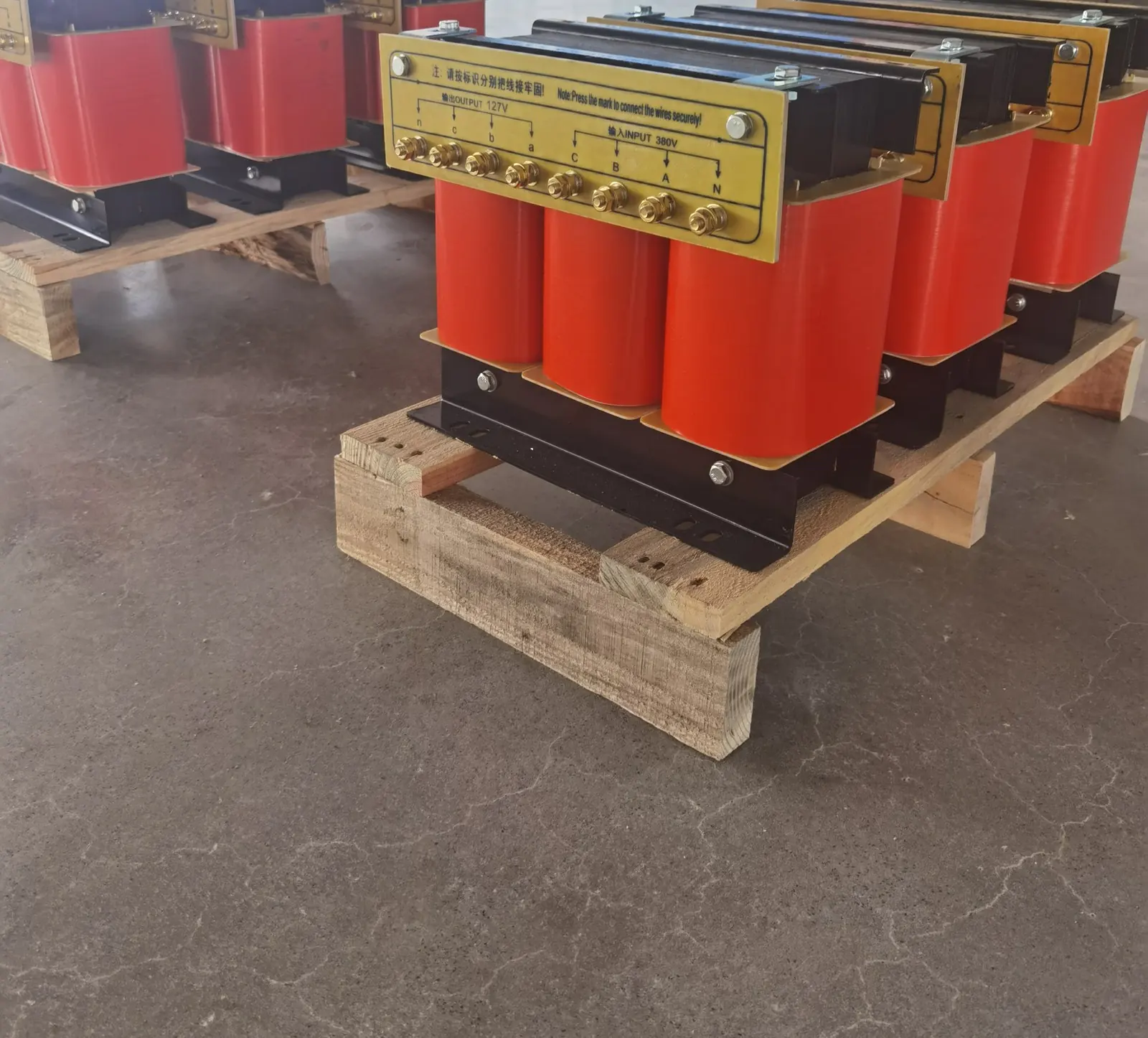
If your site supply doesn’t match your three-phase equipment voltage, we manufacture custom three-phase dry-type transformers built to order for step-up or step-down duty.
Looking at other industrial or mining transformer types for your project? Browse our full Transformer Product Range to compare options.
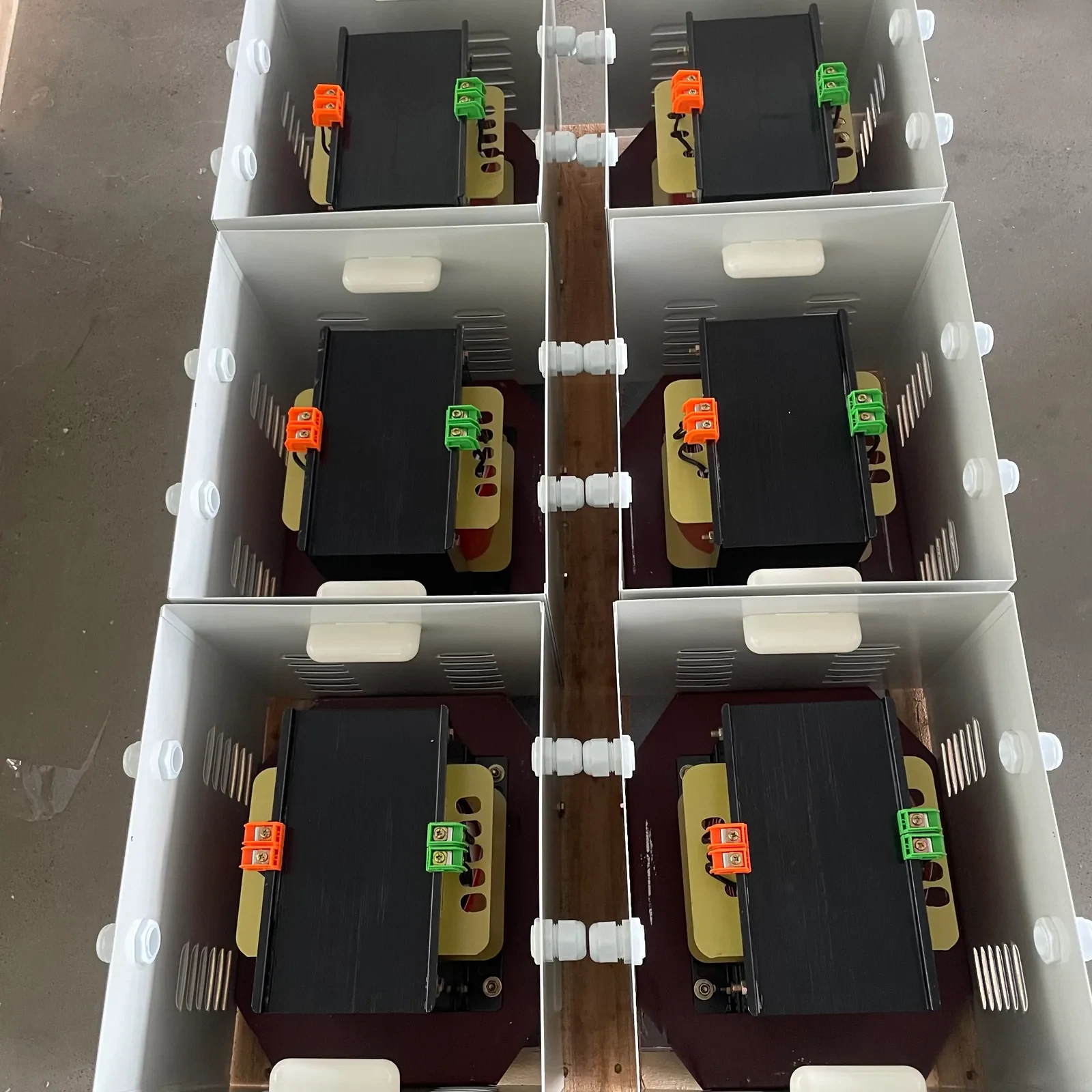
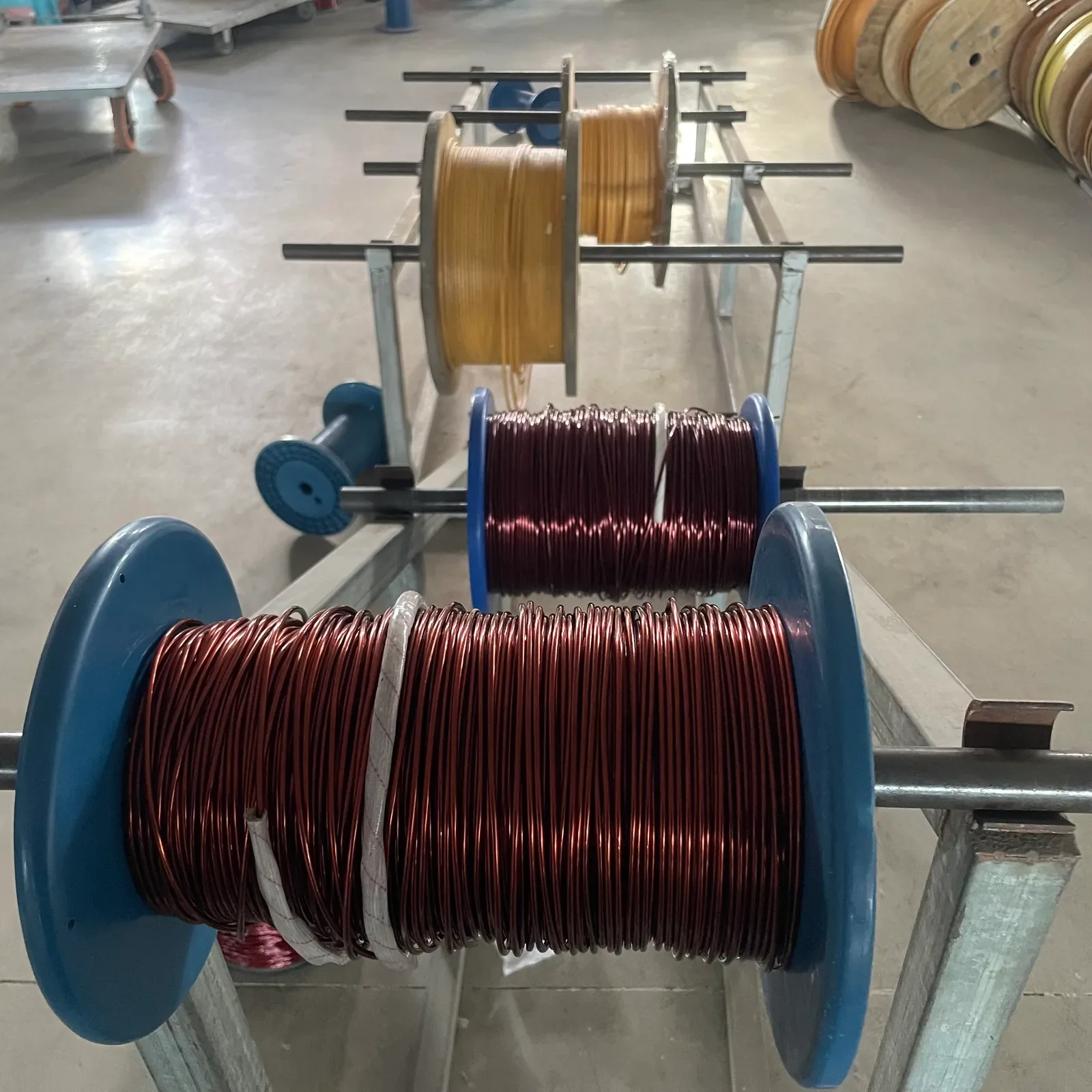
Our three-phase dry-type transformers move through an in-house workshop workflow that begins with incoming inspection of outsourced, purchased, and subcontracted parts. From winding the coils through varnish impregnation and drying to core stacking, unit assembly, wiring checks, and factory inspection, our shop completes each stage before warehousing.
Three parallel shop-floor tracks run before final assembly:
Once those three parallel tracks converge at final assembly, the assembled unit moves to factory inspection and warehousing. On our quality page, review the manufacturing and inspection process in detail. For general background on winding materials and cooling, see copper or aluminum transformer windings and how air moves heat away from a dry-type transformer.
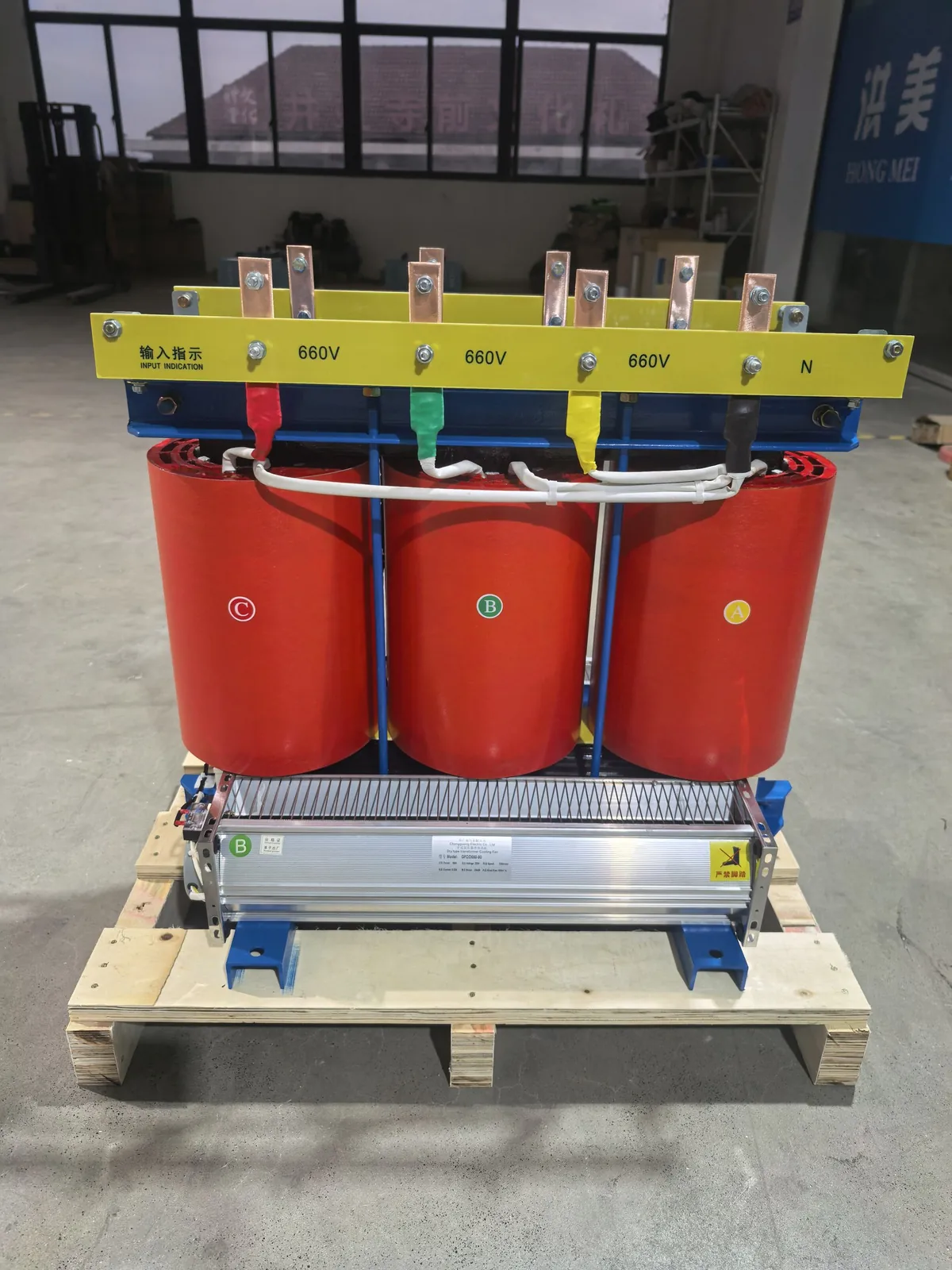
A three-phase dry-type transformer aligns your site supply with your equipment nameplate through step-up or step-down voltage conversion. A step-up transformer increases voltage when your machine needs more volts than the grid delivers. A step-down transformer decreases voltage when site supply is higher than the machine rating.
For imported machinery, pairing live connection-point readings with the equipment nameplate avoids quoting delays. Map both sides cleanly across four technical factors rather than naming a country alone:
| Configuration factor | Site supply check | Equipment nameplate check |
|---|---|---|
| Voltage level | Live connection-point voltage (phase-to-phase or phase-to-neutral). | Required three-phase input voltage on the nameplate. |
| Phase and frequency | Site three-phase supply and local grid frequency. | Equipment phase count and rated frequency (check 50 Hz / 60 Hz match). |
| Power and load | Connected machine type and operating load profile. | Rated kVA, or kW with power factor when kVA isn’t listed. |
| Enclosure and space | Installation footprint, clearance, and indoor space limits. | Enclosure, size, and material requirements. |
For a replacement build, copy the old transformer’s full nameplate alongside the input or output voltage you want to change. Before locking in your build, read three-phase voltage and phase matching and Delta or Wye load requirements. You can also check open transformer body or enclosed unit and 50Hz and 60Hz frequency compatibility. For non-standard voltage builds, review how we handle custom equipment voltage requirements.
Published utility voltage figures across Africa and Southeast Asia give your team a practical starting baseline for three-phase dry-type transformer planning. Because industrial facilities may be supplied through their own site transformers, always confirm the live voltage right where your machine connects.
| Market and utility coverage | Published low-voltage reference | Official public source |
|---|---|---|
| South Africa — Eskom low-voltage network | 230 V single-phase; 400/230 V three-phase | Eskom connection procedure, August 2016, p. 8 |
| Nigeria — nominal distribution levels | 230 V and 400 V | NERC Distribution Code, Version 02, section 4.3.1 |
| Philippines — Meralco franchise | Secondary options: 230 V, 460 V, 400/230 V; residential nominal voltage: 230 V | Meralco service-voltage FAQ |
| Malaysia — TNB, Peninsular Malaysia | 400/230 V low-voltage distribution system | TNB supply handbook, section 1.1.4.1 |
| Indonesia — low-voltage consumer distribution | 230/400 V across single- and three-phase distribution | BPSDM ESDM, August 2023 |
Each published entry carries a specific geographic or document scope. The Meralco row covers its franchise area, the TNB row covers Peninsular Malaysia, and the Indonesian entry comes from an August 2023 ministry training report. Confirm your panel’s live phase-to-phase or phase-to-neutral reading, phase count, and frequency before locking in your transformer build.
Balanced three-phase apparent power equals √3 times steady-state RMS (effective AC) line-to-line voltage and line current, divided by 1,000: kVA = √3 × V_L × I_L ÷ 1000. To check balanced full-load line current for a candidate rating, reverse it to I_L = kVA × 1000 ÷ (√3 × V_L). For a single-phase branch load, use kVA = V × I ÷ 1000 and I = kVA × 1000 ÷ V.
The balanced three-phase equation applies to sinusoidal steady-state Wye or Delta systems with equal voltages 120° apart and identical phase impedances. Unbalanced three-phase loads need separate per-phase checks instead of this line formula. When a nameplate lists real power in kW, divide kW by power factor: kVA = kW ÷ power factor (since P = S × power factor). While reactive power does no useful work, the supply source and distribution system still carry total apparent power. At a 0.5 power factor, delivering the same kW doubles the required kVA and line current. See converting kVA to kW for a transformer load for a closer walkthrough.
Two quick examples show how these formulas apply to your load list. For a balanced three-phase 400 V line-to-line load drawing 50 A, steady-state apparent power works out to √3 × 400 × 50 ÷ 1000 ≈ 34.6 kVA. When an equipment nameplate states 32 kW with a power factor of 0.8, dividing gives 32 ÷ 0.8 = 40 kVA. Plug the real numbers from your load list into these equations to set your steady-state baseline. We’ll then review your load details during quotation.
Steady-state formulas exclude motor startup surge demand, so check motor-starting loads separately in dry-type transformer ratings for motor starting loads. For full worked current tables, read converting kVA to single-phase or three-phase current.
Three-phase voltage conversion and electrical isolation are separate specification requirements. Stepping supply voltage up or down doesn’t by itself define the class of electrical separation your circuit needs. Naming any isolation requirement alongside your voltages keeps your quote aligned with your specification.
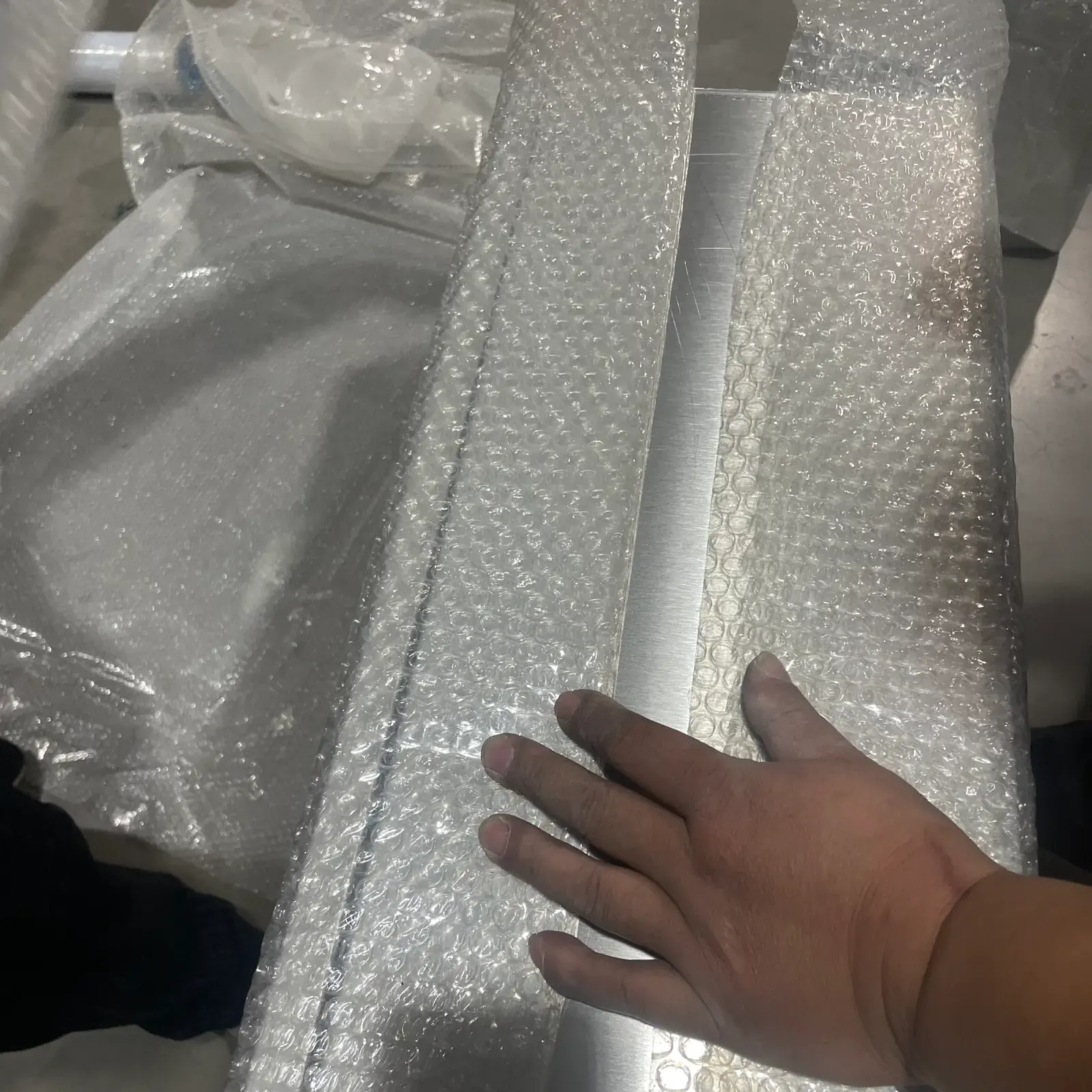
Custom three-phase dry-type transformers leave our factory packed in wood cases or cartons. Before your order ships, you can review our dispatch preparation steps or discuss transformer packing before dispatch so your receiving plan is ready.
Our custom builds include a one-year warranty starting from the day you receive the goods. When site electricians or maintenance crew run into questions during installation or operation, our team helps via remote video calls and online guidance.
Gathering four core details from your site panel and equipment nameplate helps our factory team review and quote your three-phase dry-type transformer accurately:
Five practical answers cover step-up and step-down selection, electrical isolation, order minimums, remote post-delivery support, and shipment packing prep.
Comparing your live site supply voltage against your equipment nameplate shows which conversion you need. A step-up transformer raises voltage when your machine requires more volts than your site provides, while a step-down transformer lowers voltage when site supply is higher. Listing both actual voltage values keeps your quote clear, and our voltage-matching guide walks through phase-to-phase and phase-to-neutral checks.
No—changing voltage and providing electrical separation are separate specification items. If your specification requires electrical isolation, state that requirement clearly alongside your voltages and load rating. You can compare options in our isolation transformer vs. autotransformer guide or go directly to our industrial isolation transformers page.
You can place an order starting from 1 unit, which fits a single machine installation or a one-off replacement build. We don’t charge a sample-making fee on custom orders, and each unit is quoted to your exact configuration.
Your one-year warranty begins on the day you receive the goods. If your electricians or maintenance crew hit installation or operating questions, our team walks through troubleshooting with you via remote video calls and online guidance.
Depending on the order, our factory packs three-phase dry-type transformers in either wood cases or cartons. To help your warehouse team or freight forwarder plan ahead of shipment, review our packing and dispatch preparation page.